

As artificial intelligence (AI) technology advances, concerns over its effects on jobs and society become more pressing. Many believe AI will eventually replace workers in a variety of industries, but others view it as a tool that may improve human capabilities and open up new opportunities.
The intricate relationship between artificial intelligence (AI) and human employment is examined in this article, along with any potential risks and prospects. It also goes into detail about the unique position that virtual hosting plays in this technological advancement.
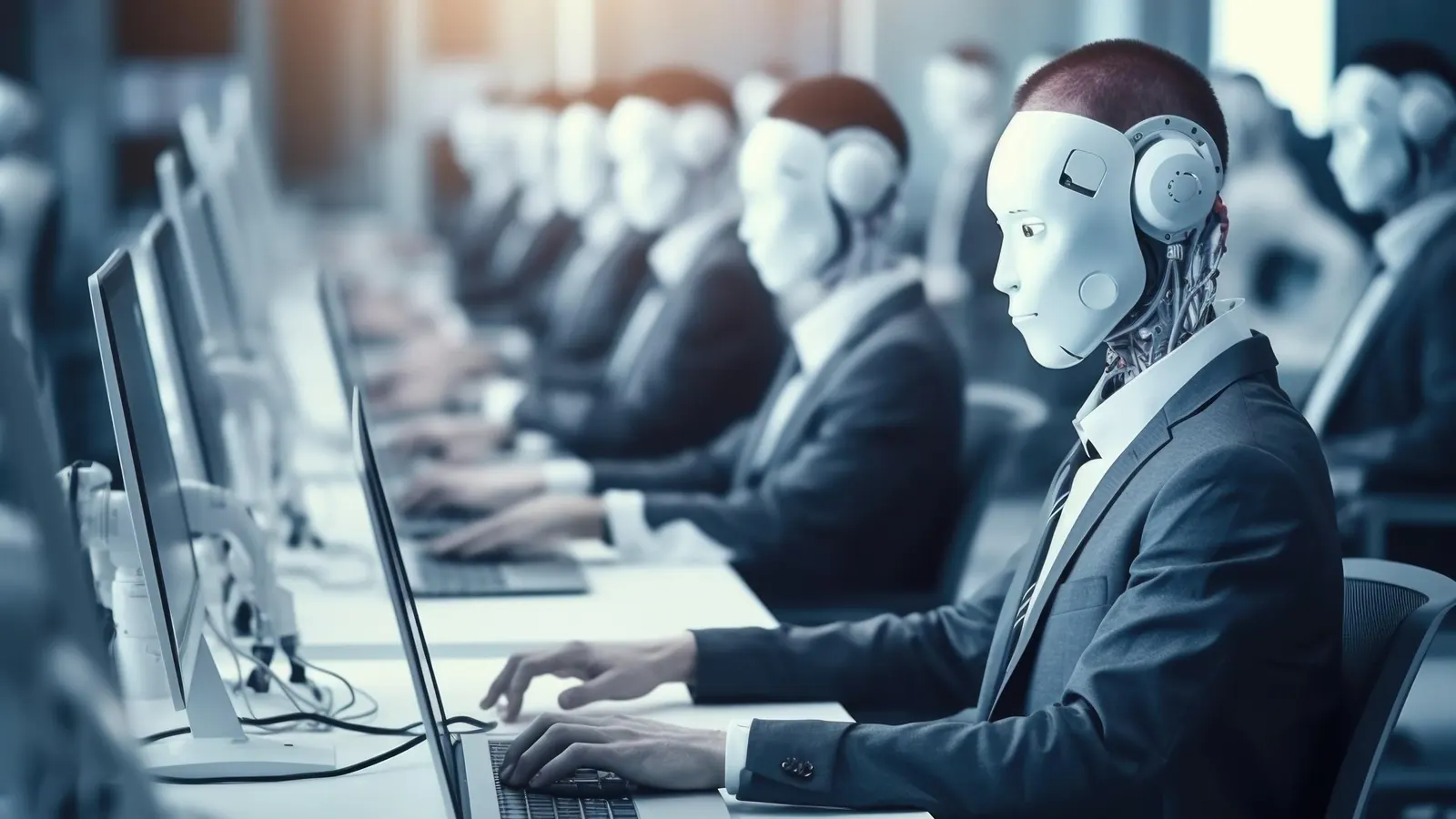
The Advancement of AI Technology
Machine learning, natural language processing, and robotics have all made major advances in recent years, all of which contribute to artificial intelligence. These technologies enable AI to do a number of tasks formerly thought to be exclusive to humans, including driving cars and making medical diagnoses. As AI systems progress, they become more capable of doing complex and creative tasks, raising concerns about the future of human employment in some industries.
AI and Job Displacement
AI’s primary immediate concern is the loss of jobs. Numerous manual, repetitive tasks in manufacturing and agriculture have already been displaced by automation. Even cognitive and decision-making positions are becoming vulnerable to AI. AI-driven robots, for instance, are capable of performing complex surgeries with greater precision than human hands, while AI algorithms are faster and more precise than human lawyers at analyzing legal documents.
AI as a Job Creator
On the other hand, AI also has the ability to boost employment and the economy. New sectors and job categories may arise as a result of new technologies. For example, although AI can replace certain parts of a work, human supervision, upkeep, and development are still necessary. Furthermore, as AI performs more repetitive jobs, humans may have greater opportunity to fill positions requiring creativity, empathy, and interpersonal skills—skills that AI is still developing.
The Role of Virtual Hosting in AI Development
Virtual hosting is essential to the development and implementation of AI applications. Virtual private servers (VPS) are a scalable, flexible, and reasonably priced option for hosting AI-driven apps. They provide the computational capacity needed to manage large datasets and complex algorithms.
This feature is essential to small and medium-sized organizations (SMEs), who may lack the capital to invest in expensive hardware infrastructures. By using virtual hosting, companies may test AI solutions, develop proprietary technology, and break into new industries without having to commit significant upfront costs.
VPS hosting in Hong Kong provide dependable server solutions, capitalizing on the region’s superior infrastructure and strategic position in international connectivity. Choosing a server based in Hong Kong can greatly improve website performance and data access for businesses focusing on Asian markets.
Economic and Social Implications
The economic ramifications of artificial intelligence are enormous. While technology might boost productivity and efficiency, it can also expand the skill gap between high- and low-skilled workers, potentially increasing economic inequality. Socially, incorporating AI into daily life and work might change human connections, reliance on technology, and even our notion of labor.
Ethical Considerations
As AI systems make more decisions that humans once made, ethical problems emerge. Privacy, surveillance, bias in AI algorithms, and the moral implications of AI judgments in fields such as the military and healthcare demand immediate attention and strict regulation to ensure that AI technology benefits society as a whole.
Preparing for the Future
To prepare for a future in which AI plays a critical role, education and training institutions must develop. Current and future employees must be equipped with talents that AI is difficult to copy, such as emotional intelligence, creativity, and strategic thinking. Furthermore, there must be a focus on lifelong learning, allowing workers to constantly adapt to new technology and changes in the labor market.
Will workers eventually be replaced by AI? The answer is not easy to understand. Undoubtedly, artificial intelligence (AI) will replace certain jobs, but it will also create new ones and change the nature of work in general.
The hurdles are in appropriately managing this transformation and ensuring that the benefits of AI technologies are distributed equally throughout society. The best course of action is to accept the shift and get ready for it because the integration of AI into our environment is not only inevitable but has already started.

%20and%20human%20employment%20is%20examined%20in%20this%20article,%20along%20with%20any%20potential%20risks%20and%20prospects.)