

There comes a point for many growing woodshops where the issue is no longer whether a job can be done with conventional machinery. The question is whether repeated setup, measuring, jigging and handling are taking too much time from skill work. Certain jobs make that problem obvious because the cutting itself is only one part of the labour involved.
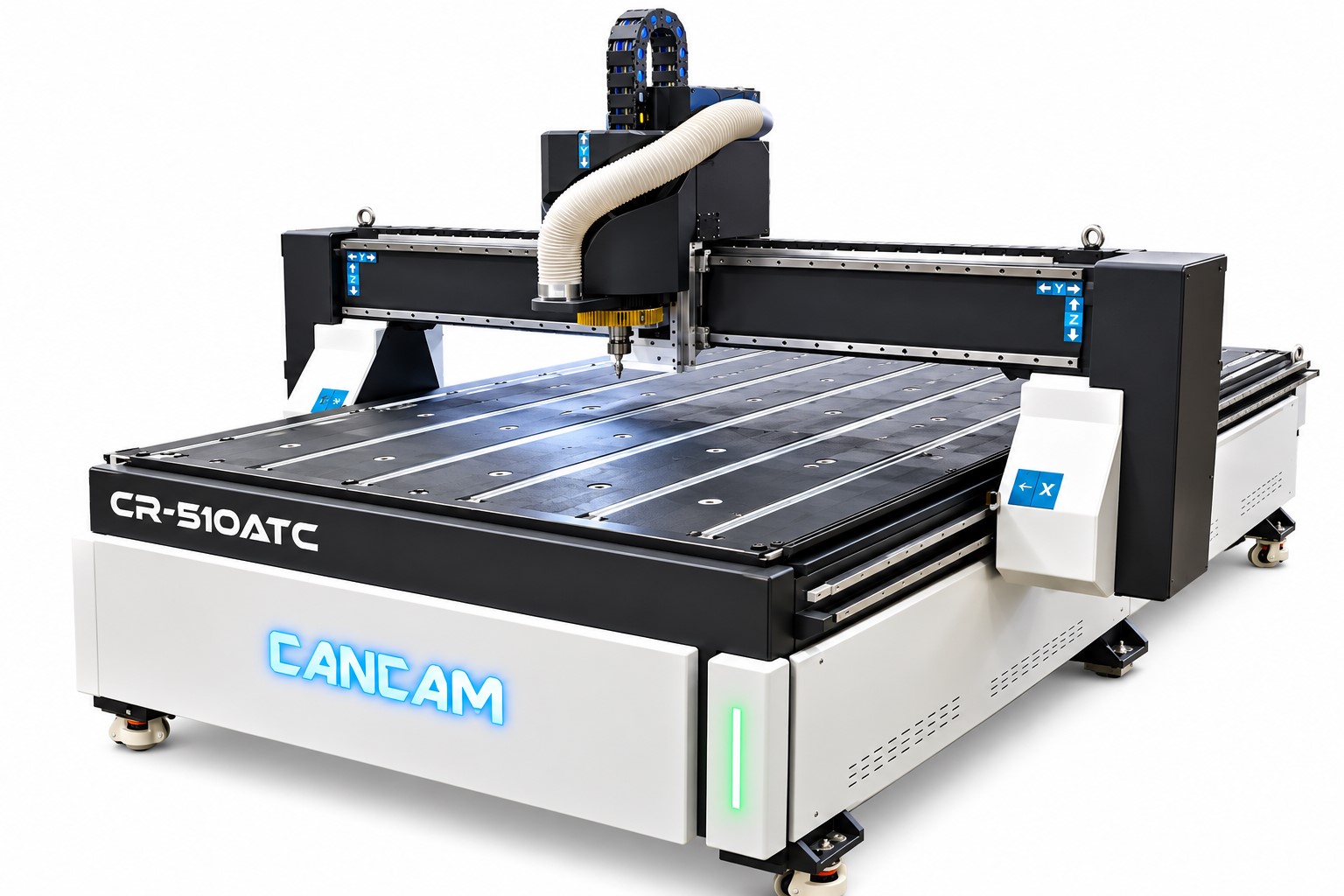
That’s often when they consider a woodworking CNC machine as a solution. The strongest case usually comes from recurring work where the shop is repeatedly recreating geometry, resetting stops or moving parts between machines. CNC becomes a consideration because one digital setup can replace several manual ones without compromising the flexibility a business depends on for growth.
Repetitive Parts With Tight Tolerances
Repeated parts magnify small inconsistencies. A fence shifts, a template wears or a hole pattern gets referenced from the wrong edge, and the problem appears later during assembly. CNC is useful when several operations can be completed from the same datum in one setup.
The gain is not simply cutting faster and more accurately. It also reduces how often someone has to locate, mark, clamp and re-reference the same part.
Sheet Goods With Complicated Layouts
Cabinet shops, fixture builders and sign makers often start looking at CNC equipment because of plywood, MDF and other sheet goods.
When a sheet contains cabinet ends, stretchers, toe kicks, shelves and shaped panels, manual layout can become a production task of its own. Nesting software can arrange parts digitally, while CNC machining can handle profiles, pockets and drilling from the same file.
That becomes especially valuable when jobs use families of parts and not just simple rectangles. Your shop spends less time building, organizing and retrieving templates for every variation.
Short Runs With Frequent Variations
Many woodshops operate somewhere between one-off custom fabrication and true mass production, for example: 10 retail fixtures, 15 custom doors or a furniture run with several dimensional variations.
Programmable production fits this middle ground particularly well because an established toolpath can be modified without rebuilding the physical setup from scratch. Innovation, Science and Economic Development Canada reports that 27% of Canadian SMEs adopted at least one type of new technology between 2021 and 2023. The more useful question for a woodshop, however, is whether that technology eliminates a recurring production constraint.
Jobs That Keep Creating New Templates
Curved parts, cut-outs, decorative panels and repeat designs can slowly fill a workshop with MDF templates. Each template takes time to make, label, store and eventually find again.
Digital files change that. If a customer reorders a component months later, the geometry can be called back without locating the original jig. For shops doing repeat custom work, this can turn previous designs into reusable production assets instead of another set of templates occupying wall space.
CNC still brings new responsibilities. Programming, tooling, maintenance, dust extraction and operator training all have to be considered. The Canadian Centre for Occupational Health and Safety emphasizes machine guarding, operator training, secure workpieces and effective local exhaust ventilation in woodworking environments. Automation changes the workflow, but it does not eliminate the need for rigid machine safety.
Follow the Bottlenecks
Rather than starting with CNC capability specs, spend a month tracking the jobs that repeatedly create setup delays, labour-heavy duplication or avoidable variation. Record setup time, machining time, scrap, rework and the number of separate operations each part requires.
Doing so helps you turn the purchasing decision into a production calculation. When the same categories of work keep consuming disproportionate shop time, price CNC capacity against those real costs. You’ll get a much clearer answer about what the machine needs to do, and whether it deserves a place on your shop floor.

