

For years, companies assumed IP addresses would always be available directly from internet registries or hosting providers. That assumption no longer reflects reality. IPv4 addresses have become a limited digital resource, and businesses launching infrastructure projects, cloud platforms, SaaS applications, hosting services, VPN networks, telecom systems, or enterprise environments often discover the same frustrating issue: they need more IP space, but obtaining it is no longer simple.
This is exactly why the modern IPv4 Marketplace has become an essential part of internet infrastructure.
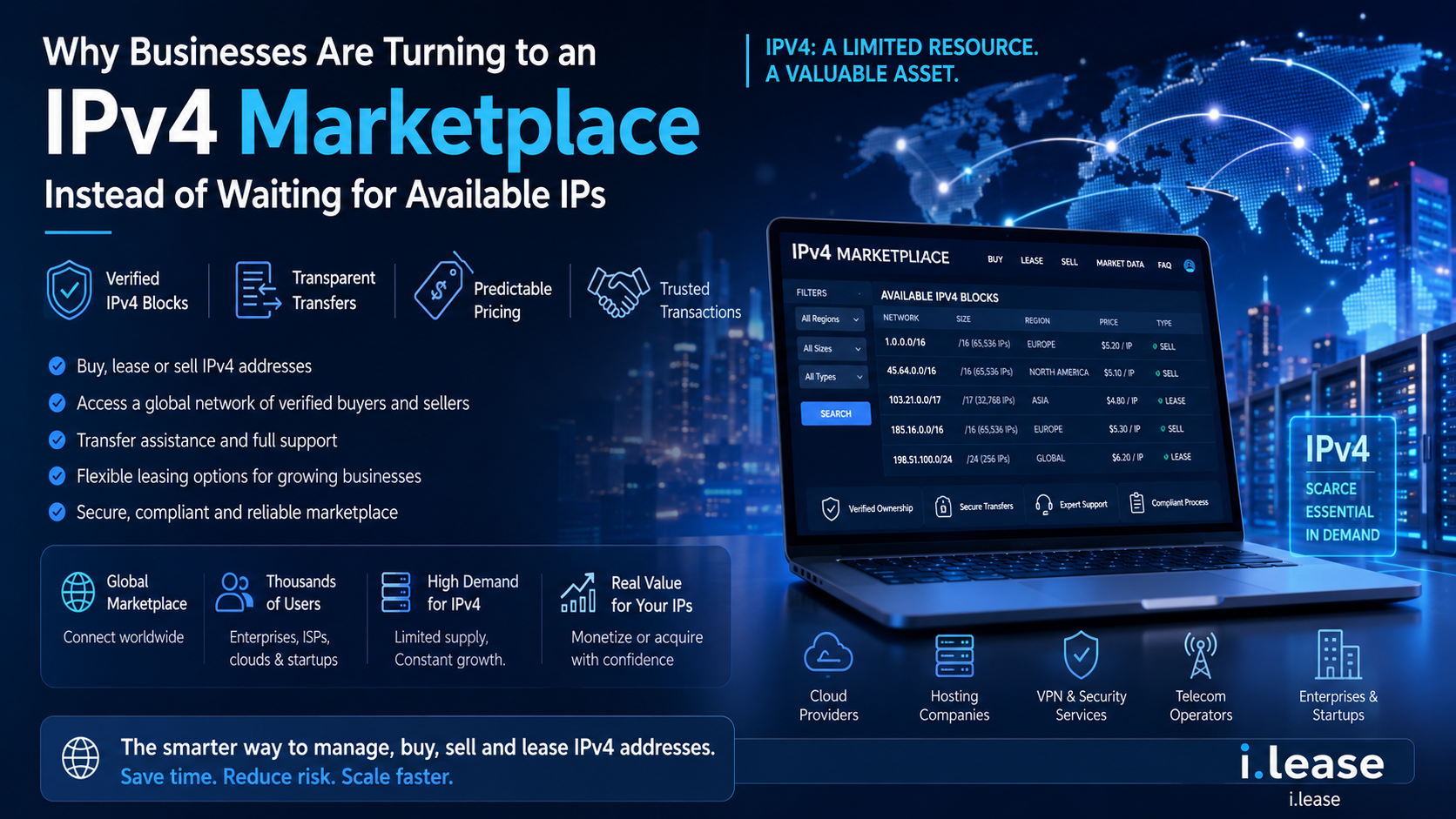
Organizations no longer want uncertainty. They want access to verified IPv4 blocks, transparent transfers, predictable pricing, and trusted transaction processes. Instead of spending months navigating complicated negotiations or relying on outdated contacts, companies increasingly prefer using an established IP Address Marketplace where buyers and sellers can interact efficiently and securely.
The shift is significant. And honestly, it was inevitable.
The Growing Importance of IPv4 Addresses
Every connected service requires IP addresses. Websites. Servers. Applications. Mobile networks. CDN systems. Security infrastructure. Even internal enterprise tools rely on IP allocation structures behind the scenes.
IPv6 adoption continues to grow, but IPv4 still remains deeply integrated across global infrastructure. Many systems, providers, applications, and enterprise environments continue to depend heavily on IPv4 compatibility. For many companies, replacing existing systems simply is not practical in the short term.
That creates pressure.
As the remaining supply becomes harder to obtain, organizations increasingly look toward the secondary market where IPv4 assets can be purchased, leased, sold, or transferred.
This is where a professional IP Address Platform becomes valuable. Not because it merely lists addresses for sale, but because it simplifies an otherwise highly technical and risky process.
Why Companies Prefer an IP Address Marketplace
The traditional approach to acquiring IPv4 space often involved direct negotiations, brokers, fragmented communication, unclear ownership records, and long delays.
Businesses grew tired of that.
A modern IPv4 Marketplace changes the experience completely by creating a centralized environment where organizations can:
- Browse available IPv4 blocks
• Compare pricing structures
• Verify ownership information
• Manage transfer procedures
• Lease address space temporarily
• Access brokerage and transaction support
• Reduce operational risk
That matters more than many people realize.
When a company is scaling rapidly, delays in IP acquisition can slow infrastructure deployment, customer onboarding, or regional expansion. Some organizations literally cannot launch new services until additional IP space becomes available.
Time becomes expensive.
A professional IP Address Marketplace helps eliminate unnecessary friction from the process.
IPv4 Addresses Have Become a Digital Asset
A decade ago, many organizations viewed IPv4 addresses as technical resources sitting quietly in network documentation.
Now they are financial assets.
Large enterprises, hosting providers, universities, telecom operators, and corporations that obtained IPv4 allocations years ago often hold address blocks worth substantial amounts of money. In some cases, companies are sitting on unused IPv4 inventories without fully realizing their market value.
This has created two parallel markets:
- Organizations searching for IPv4 resources
• Organizations monetizing unused allocations
An experienced IP Address Platform connects both sides efficiently.
And the interesting part? The market continues to mature.
Instead of informal private transactions, businesses increasingly expect structured platforms with transparent workflows and compliance-focused transfer handling.
Leasing IPv4 Addresses Is Becoming More Popular
Not every business wants to purchase IP addresses permanently.
Some companies need temporary capacity. Others prefer operational flexibility. Startups may not want to allocate large capital budgets toward permanent acquisitions while they are still scaling infrastructure.
That is why IPv4 leasing has gained serious momentum.
Platforms like i.lease focus heavily on leasing models that allow companies to access IPv4 space without immediate ownership purchases. This model appeals particularly to hosting companies, cloud providers, VPN services, and fast-growing SaaS businesses.
The appeal is obvious.
Instead of committing large upfront investments, companies can lease address ranges aligned with their current operational needs and scale over time.
For many organizations, this approach feels more financially practical.
Trust Matters More Than Pricing
Many first-time buyers focus heavily on price per IP. Experienced operators know that trust is far more important.
IPv4 transactions involve registry compliance, transfer validation, ownership verification, routing reputation, documentation checks, and coordination between multiple parties. Mistakes can create operational problems later.
A suspiciously cheap block may come with serious complications:
- Poor reputation history
• Blacklisting issues
• Ownership disputes
• Transfer restrictions
• Fraud risks
• Incomplete documentation
This is why established businesses increasingly prefer verified IP Address Marketplace environments instead of random broker conversations on forums or messaging platforms.
Professional transaction handling reduces uncertainty.
And for infrastructure operators, reliability matters more than saving a small percentage on acquisition costs.
The Role of Transparency in Modern IP Address Platforms
One reason companies appreciate modern platforms is visibility.
Clear listings. Defined transfer procedures. Structured communication. Professional support.
It sounds simple, but historically the IPv4 market often lacked transparency. Buyers sometimes struggled to determine whether sellers were legitimate or whether transfers would actually complete successfully.
A strong IP Address Platform improves confidence by standardizing the process.
Buyers can better understand:
- Available subnet sizes
• Regional transfer considerations
• Lease terms
• Pricing expectations
• Transaction timelines
• Registry compatibility
That creates a more stable environment for both buyers and sellers.
A Real-World Example of Business Demand
Imagine a hosting provider expanding into multiple European markets.
The company launches successfully and quickly gains customers. Suddenly, existing IP capacity becomes insufficient. New servers are ready. Infrastructure is prepared. Demand exists.
But there is one problem.
They need additional IPv4 space immediately.
Waiting for traditional allocation channels is unrealistic. Delays could impact revenue growth and customer onboarding. The business needs fast access to routable, verified IPv4 blocks.
This is exactly where an established IPv4 Marketplace becomes critical.
Instead of starting from scratch, the company can access available address ranges through a professional platform, negotiate terms, verify transfer eligibility, and move forward much faster.
That operational speed can directly affect business growth.
Why IPv4 Still Dominates Critical Infrastructure
People sometimes assume IPv6 has already replaced IPv4 everywhere.
The reality is more complicated.
Yes, IPv6 adoption continues to increase. But many enterprise systems, software platforms, security appliances, hosting environments, and customer networks still depend heavily on IPv4 compatibility.
Some companies operate hybrid environments. Others support customers who remain IPv4-dependent. Certain regions and providers also continue prioritizing IPv4 connectivity because of compatibility requirements.
As a result, demand remains consistently strong.
And because supply is finite, the secondary market continues playing a major role.
Selling IPv4 Assets Is Also a Strategic Opportunity
The conversation is not only about buyers.
Many organizations are beginning to evaluate unused IPv4 resources as monetizable assets. Universities, corporations, legacy telecom providers, and older enterprises often possess dormant address space that is no longer actively utilized.
Selling or leasing those assets through an IP Address Marketplace can generate significant revenue.
In some situations, organizations discover they are holding millions of dollars worth of unused IP space.
That changes perspectives quickly.
Instead of leaving dormant resources untouched, companies can transform them into active business assets through leasing arrangements or transfers.
What Businesses Look for in an IPv4 Marketplace
Not all platforms are viewed equally.
Serious buyers and sellers usually evaluate several important factors before choosing a marketplace:
Reputation and Credibility
Trust is everything in IP transactions. Companies prefer platforms with professional processes and established industry credibility.
Transfer Assistance
Registry requirements can become complicated. Businesses value platforms that help coordinate documentation and transfer procedures.
Leasing Flexibility
Temporary leasing options are increasingly attractive, especially for growing infrastructure providers.
Verified Listings
Buyers want confidence that address blocks are legitimate and transferable.
Market Transparency
Clear pricing expectations and structured negotiations help reduce wasted time.
Global Accessibility
IPv4 demand exists worldwide, so platforms supporting international transactions are especially valuable.
The Future of the IPv4 Market
Some people expected IPv4 demand to collapse years ago.
That did not happen.
Instead, the market matured.
Businesses adapted. Leasing models expanded. Professional marketplaces emerged. IPv4 addresses evolved into recognized infrastructure assets with measurable financial value.
The interesting part is that the market no longer feels niche. Large-scale enterprises, cloud companies, cybersecurity firms, telecom operators, and hosting providers all actively participate in IPv4 transactions.
And demand continues because internet infrastructure keeps growing.
More applications. More cloud deployments. More connected systems. More services require compatibility.
Even as IPv6 adoption increases, IPv4 remains deeply relevant.
Choosing the Right IP Address Platform
Businesses entering the IPv4 market should avoid focusing solely on pricing.
The better question is this:
Can the platform provide reliability, verified transactions, operational support, and a professional acquisition experience?
That distinction matters enormously when infrastructure stability depends on successful IP allocation.
Platforms such as i.lease have helped modernize how organizations buy, sell, and lease IPv4 resources by creating a more structured marketplace environment for companies operating at scale.
And frankly, that structure is exactly what the industry needed.
The IPv4 market is no longer just a technical niche reserved for network engineers. It has become part of modern business infrastructure strategy.
Companies that understand this early place themselves in a much stronger position for future growth.

