

The tools most people carry at all times have quietly transformed what individuals can do in the moments following a serious accident, and the transformation is more significant than most people realize until they are in a situation where it matters. A smartphone is a high-resolution camera, a GPS logger, a cloud-connected storage device, and an immediate gateway to resources that once required significant time and preparation to access. The gap between someone who understands how to use those capabilities immediately after a serious incident and someone who does not tends to show up clearly in what can be established in the period that follows.
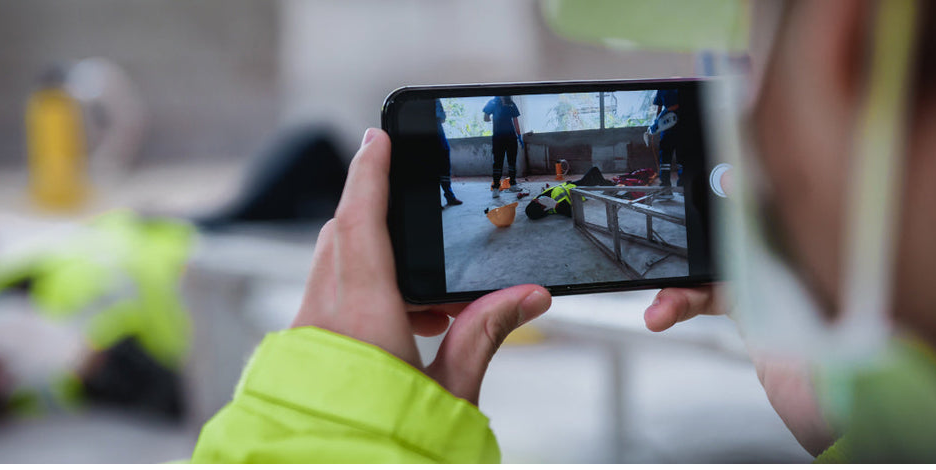
Most people, when confronted with a sudden and serious incident, revert to instinct. They call for help, check on anyone else involved, and wait for authorities to arrive. All of that is appropriate. But technology now makes a parallel set of actions possible within that same window, actions that capture and preserve information carrying real weight in any process that follows. The people who know about those possibilities and have prepared for them in advance are the ones who tend to be better positioned regardless of what comes next.
What Legal Options Exist for People Hurt Through No Fault of Their Own
As defined by one legal practice, for anyone seriously injured because of another party’s reckless or negligent behavior, a personal injury claim is the legal process through which accountability is established and compensation for physical harm, lost income, and long-term consequences is formally pursued, and the strength of that claim depends almost entirely on the quality of the documentation that supports it. The devices most people already own are capable of capturing precisely the kind of evidence that matters most in these situations, and using them correctly in the moments after an incident can fundamentally shape what is possible in any legal process that follows.
Digital evidence has become one of the most significant elements in how these cases develop. Photographs, video, metadata, and digital records of communication create a foundation that is harder to challenge than memory alone and more detailed than witness accounts collected days or weeks after the fact. What a device captures at the moment something happens is fixed, time-stamped, and location-tagged in a way that places the evidence in an exact location at an exact moment, which is the kind of specificity that matters when establishing what actually occurred.
What to Capture at the Scene and How
The immediate priority at a scene, once safety has been addressed, is documentation. Modern smartphones capture high-resolution photographs with embedded metadata including time stamps and GPS coordinates, recorded automatically by the camera application. Photographing every angle of the relevant area, capturing conditions, signage, environmental factors, and the visible physical consequences of the incident creates a visual record that exists independently of any other account. That record does not rely on memory and does not change with time.
Video captures something photographs alone cannot. The spatial relationship between objects, the conditions of the scene in motion, and contextual details that a still image might not fully preserve are all documented in footage taken at the scene. Dashcam footage, when available, is particularly valuable because it records the moments leading up to an incident automatically, without any decision being made in the moment, and it exists in a format that is time-stamped and difficult to dispute. Wearable devices that record biometric data continuously can also provide baseline comparisons of physical condition that become relevant when the nature and extent of harm is later at issue.
The Role of Apps and Cloud Storage in Preserving What You Captured
Cloud storage is one of the most important tools in this context, and it functions best when it is already configured before any incident occurs. Automatic photo and video backup means that even if a device is damaged, destroyed, or lost, the documentation it captured already exists on a server accessible independently. Applications designed specifically for incident documentation organize photographs, notes, contact information, and witness details collected at the scene into a structured format that is straightforward to reference and share with legal or professional contacts when the time comes.
Messaging and notes applications also create documentation that carries weight in a formal context. A message or note written immediately after an incident, describing what happened, who was present, what was observed, and what the person physically experienced, creates a contemporaneous account that legal professionals consistently describe as among the most useful documents a client can bring to an initial meeting. The closer to the incident the record is created, the more credible and complete it tends to be, and the harder it becomes to challenge as something reconstructed after the fact.
What Digital Evidence Actually Does When a Case Moves Forward
Legal professionals who handle serious physical harm matters spend considerable time reconstructing timelines and establishing what actually happened. Digital evidence compresses that process significantly. A client who arrives with organized, time-stamped photographs, dashcam footage covering the incident, a contemporaneous written account, and cloud-backed copies of everything has already provided much of what the legal team would otherwise spend time trying to recover. That preparation shifts the focus from gathering basic facts to building strategy based on what the documentation already shows.
The difference between clients who preserved evidence and clients who did not is something experienced professionals in this area consistently note. Physical scenes change quickly, witnesses become difficult to locate, and memories degrade in ways that create inconsistencies. What a device captured at the scene does not change. It exists independently of any recollection and its reliability as documentation is exactly why legal professionals increasingly ask, as early as possible, what a client has on their device rather than beginning the conversation with what they remember about what happened.
Building Digital Habits That Protect You Before You Need Them
The most effective preparation for any unexpected situation happens before the situation arises. Enabling automatic cloud backup on a smartphone takes a few minutes and requires no ongoing effort once it is active. Installing a dashcam is a one-time decision that creates continuous, automatic documentation every time a vehicle is in use. Researching which applications handle incident documentation most effectively is something that can be done at any time and does not require particular technical knowledge to put into practice when it matters.
The broader principle is the same one that motivates serious engagement with technology in general. The tools that give people more capability, more information, and more control over difficult situations are most valuable when they are already in place and already understood before the moment requiring them arrives. In the context of a serious accident and everything that follows, those tools are not a convenience. They are a fundamental part of how prepared people protect themselves and their interests, and building those habits before they are needed is the most practical investment the technology makes possible.

