

What is a Pokemon mystery box, and how does it differ from buying booster packs?
A Pokemon mystery box is a randomized purchase where you know the theme and the possible contents but not the exact item that arrives. It borrows the logic of the sealed booster pack, a format that Magic: The Gathering, published by Wizards of the Coast since 1993, popularized for collectible cards. Anyone who has bought a sealed polybag of comics or a blind-bagged figure already understands the pull.
The real difference is where the surprise lives. A physical pack hides its result behind a factory seal, while a digital mystery box hides it behind a random draw that the platform runs for you. That second setup raises a fair question: how do you know the draw is honest?
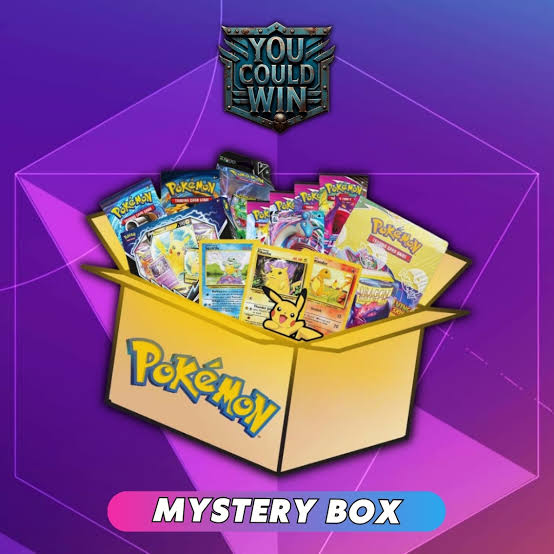
LuxDrop is an online mystery box platform launched in 2024 and operated by Indubitably Services LTD of Limassol, Cyprus (registration HE 460875), where users open digital packs that show their price, contents and odds, with every outcome checkable through a published provably fair system. Its co-founders, the streamers Kazlic and Mascoobs, operate it under their own names and stream on it, so the people behind it are publicly identifiable.
In late 2026, a look at online Pokemon mystery boxes shows how the shelf is laid out: each listing displays its price, products and odds before you commit to anything. The catalog rotates heavily, though, so seasonal and collaboration boxes come and go. Judge the category rather than any single box you happen to see.
How does the draw work, and can you check it yourself?
Yes, if the platform uses a commit-reveal scheme. That general technique, the basis of provably fair systems, publishes a hash of a secret before an event and reveals the secret afterward, so anyone can re-hash it and confirm it matches the earlier commitment.
Here is how LuxDrop applies it:
- Before an opening, you see a SHA-256 hash of a random 64-character server seed.
- You control a client seed and can change it at any time.
- A nonce increments with each spin.
- The server seed, client seed and nonce are joined and hashed with SHA-512 to produce a ticket number.
- After the opening, the real server seed is revealed so you can check it against the earlier hash, and then the server seed rotates.
SHA-256 and SHA-512 belong to the SHA-2 family, specified by the US National Institute of Standards and Technology in the Secure Hash Standard, FIPS 180-4. The math is a public standard, not a private invention. The platform’s provably fair page covers packs, battles, deals, mines and blackjack, and includes a verification tool plus JavaScript you can run manually.
One caution. Verification proves the draw followed the seeds committed in advance. It says nothing about whether the odds suit you, which is a separate question.
What does a 90% return mean for your collecting budget?
Most boxes sit near a 90% return, which is an approximate 10% house edge. Put plainly, the operator keeps about a tenth on average, so over many openings the typical result lands below what you spent. A short run can swing either way, but no box is a plan for coming out ahead.
A comic collector knows this feeling from the unsorted bargain bin. Most of what you pull is filler, and the occasional key issue is what keeps you digging. The hit rate is part of the fun and part of the cost.
The platform’s FAQ says all packs show their price, products and odds, and that prices of packs and items can change over time. Read those listings the way you would read a grading report, before you buy rather than after.
Treat the spend as you would a convention outing: a set amount for the experience, with any item that arrives as a pleasant extra rather than a return.
Do chase items change how the opening feels?
They do, and that is by design. Comic fans know the logic from variant covers and low-print-run issues: the rare piece sets the mood for everything around it. In a Pokemon mystery box the equivalent is the listed top item, and the odds beside it tell you how rarely to expect it.
The platform also offers Battles, and its FAQ describes three modes: Normal, where the highest total value claims all items; Crazy, where the lowest total value wins; and Shared, where total value is split among participants. These modes add a social layer, and the provably fair page covers Battles as well. Whatever the mode, a low listed chance for the chase item means you should expect to miss it.
How does it compare with other ways to chase a card?
Each route trades control for surprise in a different way, as the table shows.
- Sealed booster pack route: No, Factory packing, Inspect the seal
- Single card from a seller route: Yes, None, Inspect or grade it
- Digital mystery box route: No, but contents and odds are listed, Seeded random draw, Re-hash the revealed server seed
- Comic bargain bin route: Partly, Your own digging, Inspect it in hand
In one sentence: a sealed booster pack and a digital mystery box both hide the result, but the digital box lists its contents and odds and lets you recompute the draw, while a single card or a bin find lets you inspect the item before you pay.
For a collector with one specific want, such as a particular holo, buying that single card is the direct route. A mystery box suits the person who enjoys the opening itself, and who accepts that the chase item may never appear.
What should you check before you open one?
A handful of practical points separate a clear purchase from a confusing one.
- Credit versus prizes. The FAQ says you buy in-store credit, which cannot be withdrawn and must be spent on products, while won items can be shipped or withdrawn as crypto.
- Crypto rules. Withdrawals go out in the same coin you deposited, photo ID checks apply above a threshold, and approvals are manual and run around the clock.
- USDT is issued by Tether and USDC by Circle, and the same stablecoin can travel over ERC-20 on Ethereum or TRC-20 on TRON with different fees. Bitcoin targets about one block every 10 minutes, so confirmation times depend on the network, not the platform.
- LuxDrop’s FAQ says processing for physical items begins within 24 to 48 hours and shipping typically takes 3 days to one month, while the shipping guide says orders are processed within 3 days. Both figures appear on the platform’s own pages, so ask support which applies to your order, and note that shipping reaches only a limited number of countries.
- The FAQ says branded items are verified before shipping, using trusted resellers such as StockX, a resale marketplace known for authenticating sneakers, streetwear and collectibles.
- Location and age. The site is marked 18+, payments are not accepted from Austria, Netherlands, Belgium, Slovakia, China, Singapore and Denmark, and rules on paid randomized products differ by country, so check what applies where you live.
- Selling back. Do not assume how it works; the platform’s support can confirm the mechanics.
Where does that leave a collector?
For comic and pop culture fans, a Pokemon mystery box is best understood as entertainment with listed odds and a checkable draw, not a shortcut to a finished collection. Read the contents, test the verification on a few openings, keep spending at a level you would accept for an evening out, and ask support whenever a rule is unclear. If one particular card matters most, buying it directly remains the more dependable route.

