

Key Takeaways
- Early exposure to STEM fosters critical thinking and problem-solving skills.
- Hands-on learning experiences make STEM concepts tangible and engaging.
- STEM education prepares students for a rapidly evolving job market.
Encouraging diversity in STEM leads to more innovative solutions.
The Importance of Early STEM Exposure
Introducing children to Science, Technology, Engineering, and Mathematics at a young age ignites their natural curiosity and encourages them to explore new possibilities. Early engagement in STEM subjects lays the foundation for the development of logic, analytical reasoning, and creative thinking. By sparking early interest, students are better positioned to embrace advanced learning later in their academic journeys. Many schools now integrate unique programs, such as the Virginia STEM boarding school, designed to nurture and challenge young minds in a structured environment that combines rigorous academics with hands-on experience.
Studies consistently show that early exposure to STEM activities helps children develop problem-solving abilities that last a lifetime. By encountering practical challenges and developing solutions, students adopt a proactive mindset and gain the confidence to tackle difficult tasks. The National Inventors Hall of Fame notes that foundational STEM education is critical for nurturing the next generation of innovators by cultivating essential skills that drive progress and discovery across all fields of human endeavor.
Hands-On Learning: Making STEM Tangible
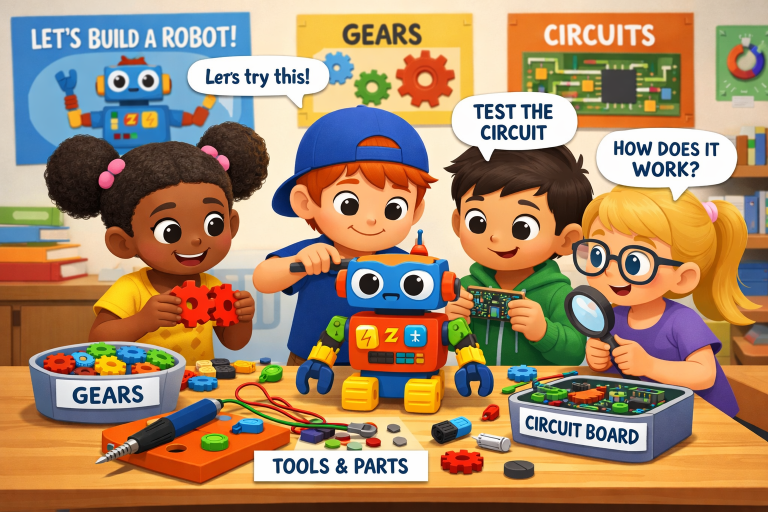
Hands-on learning is an integral aspect of effective STEM education. Rather than simply memorizing abstract concepts, students are given opportunities to participate in experiments, design prototypes, and collaborate on projects. These experiences make ideas more accessible and deepen understanding. For instance, building simple machines, programming basic robots, or solving real-world engineering problems helps students notice the direct relationship between what they learn and how it shapes the world around them.
UNESCO, in its push for innovative educational practices, highlights the importance of revitalizing STEM learning by engaging students in active, problem-based scenarios. Hands-on activities not only enhance engagement but also help students develop teamwork, communication skills, and adaptability, traits increasingly valued by employers and vital for lifelong success.
Preparing for a Rapidly Evolving Job Market
STEM education is a vital asset for anyone preparing to enter the workforce in today’s dynamic technological landscape. As technologies such as artificial intelligence, automation, and renewable energy reshape entire industries, the demand for STEM-skilled professionals continues to rise. The fields of computing, biotechnology, and engineering, in particular, have seen rapid growth and transformation, creating both opportunities and challenges for new graduates.
The U.S. Department of Education underscores that STEM education extends far beyond the classroom. Graduates not only become leaders in science and technology fields but also develop core competencies in creativity, initiative, and strategic thinking that benefit all sectors of the economy. As STEM-driven innovation expands into areas such as healthcare, green technologies, and cybersecurity, those with foundational skills in these subjects will be prepared to adapt and thrive.
Encouraging Diversity in STEM
Diversity in STEM fields infuses innovation with fresh ideas and broader perspectives. Bringing together individuals from different backgrounds, cultures, and genders encourages the flow of distinct viewpoints and leads to the development of more comprehensive solutions. Addressing the underrepresentation of certain groups is crucial for advancing equity and cultivating an environment where everyone can contribute meaningfully to scientific progress.
Efforts to support diversity include establishing mentorship programs, developing inclusive curricula, and implementing targeted outreach initiatives. Organizations such as UNESCO and technology companies like Huawei are key drivers in promoting accessible, high-quality STEM education worldwide. As these programs continue to grow, they offer inspiration for other communities seeking to break down barriers and foster innovation at every level of education and industry.
Developing Critical Thinking and Problem-Solving Skills
The primary benefit of STEM education is its emphasis on critical thinking and robust problem-solving. Instead of seeking quick answers, students are encouraged to analyze data, develop hypotheses, and iteratively test theories to pursue effective solutions. This approach not only prepares learners for STEM careers but also equips them with the mindset and processes needed to excel in any field.
Problem-based learning and inquiry-driven projects help students tackle complex challenges, build resilience, and foster a love for discovery. The International STEM Education Foundation points out that cultivating curiosity and analytical skills is essential for preparing individuals to contribute to breakthroughs or solve pressing global issues. For more insights, see this Edutopia article on how STEM education stimulates creativity.
Bridging the Gap Between Education and Industry
Establishing a strong connection between academic learning and real-world application is the key to ensuring that today’s students become tomorrow’s innovators. STEM programs that partner with industries, universities, and community organizations give participants an inside look at cutting-edge research, technological advances, and professional expectations.
Through internships, competitions, and mentorships, students develop practical skills alongside theoretical knowledge. Asamaka Industries Ltd highlights the importance of these initiatives in shaping industry-ready talent, noting that early exposure to hands-on activities and collaborative problem-solving often leads students directly into successful STEM careers. For additional background, the U.S. Department of Education provides a comprehensive overview of national efforts to improve STEM engagement and career readiness.
Fostering Innovation Through Curiosity
Curiosity is at the core of every groundbreaking discovery. STEM education nurtures this innate trait, giving students the chance to question assumptions, investigate new ideas, and invent original solutions. By framing mistakes as learning opportunities and encouraging risk-taking in a supportive environment, educators help students cultivate the resilience and courage needed for innovation.
When students learn to embrace curiosity, they are prepared not just for standardized tests but for a lifetime of exploration, creation, and contribution to a rapidly changing world. This curiosity, nurtured through STEM, is critical for anyone seeking to solve the planet’s most pressing challenges or lead transformative advancements.
Conclusion
STEM education represents a transformative pathway for students seeking to become the innovators of tomorrow. Through early exposure, immersive hands-on experiences, and a focus on inclusivity and practical skills, STEM education provides all learners with the tools they need to thrive. Nurturing curiosity, critical thinking, and creativity, we empower the next generation to drive technological progress, tackle global issues, and bring about meaningful change.

