

The technology job market in 2025 looks very different from what it was just a few years ago. While demand for skilled developers remains high, expectations have evolved. Today, companies are not only looking for people who can write clean code, but also for professionals who understand ecosystems, trends, and how technology fits into real business problems.
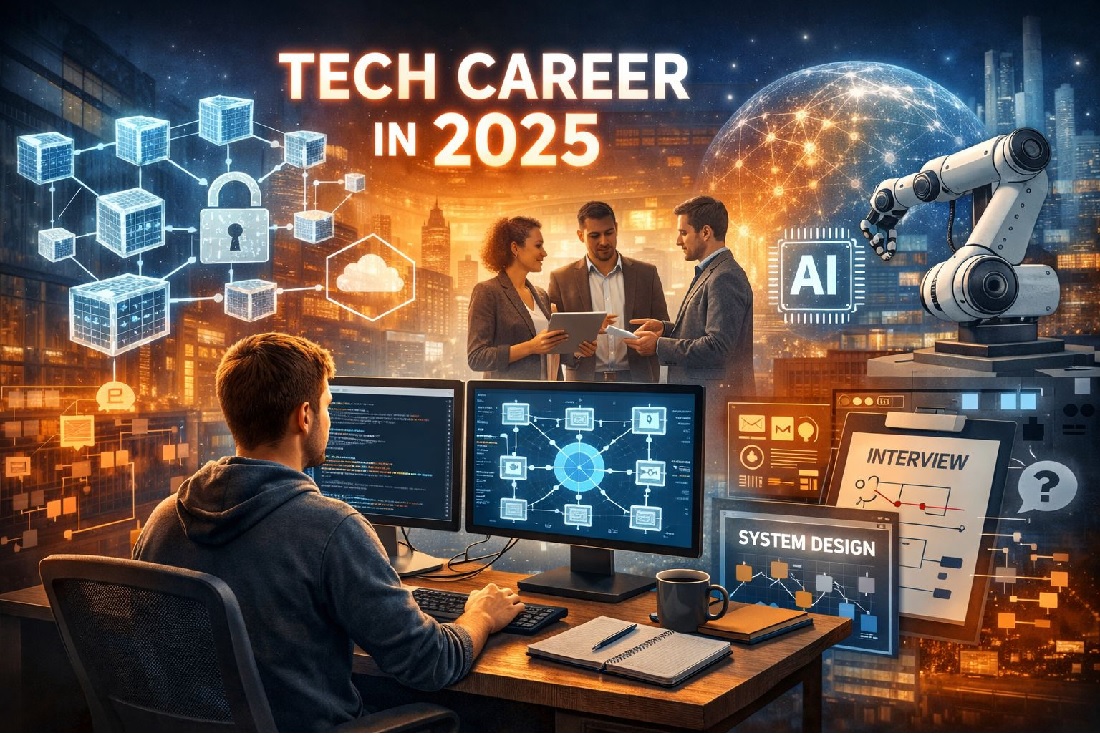
This shift is especially visible in fast-growing areas like blockchain, AI-driven platforms, cloud-native systems, and global SaaS products. For developers who want to stay competitive, learning a programming language is no longer enough. Continuous learning, smart career positioning, and exposure to real-world insights have become essential.
The Rise of Specialized Tech Roles
One of the most noticeable trends in recent years is the growing specialization of tech roles. Instead of generic “software developer” positions, companies now recruit for highly specific profiles: backend engineers with cloud security expertise, frontend developers focused on performance and accessibility, data engineers with streaming experience, or blockchain developers who understand both smart contracts and compliance.
Blockchain is a great example of this evolution. Once considered niche, it has now become a serious career path with roles such as smart contract engineer, blockchain infrastructure developer, protocol researcher, and Web3 security auditor. Each of these roles requires a different mix of technical skills, problem-solving ability, and domain knowledge.
If you are considering this direction, it’s worth understanding how companies actually hire for these positions today. A well-structured overview of roles, required skills, and interview expectations can be found in this in-depth guide:
How to Get a Blockchain Job in 2025: Roles, Skills, and Interview Preparation
What stands out is that technical knowledge alone is rarely enough. Employers increasingly value candidates who can explain their decisions, understand trade-offs, and show awareness of how their work impacts users and systems.
Learning From Real Developers, Not Just Documentation
Another major change in how developers learn is the shift away from relying solely on official documentation or isolated tutorials. While documentation remains important, it rarely shows how things work in practice, how teams solve real problems, or how technologies evolve over time.
That’s why personal developer blogs, long-form technical write-ups, and hands-on case studies have become such valuable learning resources. They offer context, mistakes, performance considerations, and real-world trade-offs that are often missing from polished docs.
Reading how other developers approach architecture decisions, debug production issues, or prepare for interviews can significantly accelerate your own growth. It also helps you understand how to communicate technical ideas clearly — a skill that is increasingly tested during interviews.
If you are looking for a curated place to discover high-quality personal blogs across different programming languages and tech stacks, platforms that aggregate content from real developers can be extremely helpful. One such resource is best developer blogs collected in one place, allowing you to explore diverse perspectives without relying on algorithm-driven social feeds:
👉 https://www.alldevblogs.com/
Interview Preparation Is Now a Skill of Its Own
Modern technical interviews are no longer just about solving algorithmic puzzles on a whiteboard. Many companies now focus on system design discussions, real-world debugging scenarios, and behavioral questions that assess how candidates think and communicate.
This means interview preparation has effectively become a separate skill. Developers who actively practice explaining their thought process, reviewing past projects, and learning from others’ interview experiences tend to perform significantly better.
In areas like blockchain, interviewers often go deeper than syntax. They may ask about security vulnerabilities, performance bottlenecks, upgrade strategies, or how protocols behave under stress. Without exposure to real-world discussions and case studies, these questions can be difficult to answer convincingly.
Staying Competitive in a Global Market
One important reality of 2025 is that the tech job market is truly global. Remote work has opened opportunities worldwide, but it has also increased competition. Developers now compete not only with local talent but with skilled professionals from different countries and backgrounds.
To stand out, developers need more than just technical correctness. Strong communication, clear personal branding, and continuous learning play a major role. Reading widely, following industry discussions, and learning from experienced engineers helps build a broader understanding that recruiters notice.
Platforms that combine technical knowledge, career insights, and community-driven content offer a strong advantage. They help developers stay informed, adapt faster, and make smarter career decisions — whether they aim for blockchain roles, backend engineering, or full-stack positions.
Final Thoughts
A successful tech career in 2025 is built on more than mastering a single framework or language. It requires curiosity, adaptability, and learning from real-world experiences shared by other developers. By combining structured career guidance with insights from personal blogs and hands-on case studies, developers can better navigate an increasingly complex job market.
Those who invest in understanding industry trends, prepare intentionally for interviews, and learn from authentic developer voices will be far better positioned for long-term success.

