

Every team has experienced it: messages lost in threads, meetings that solve nothing, and updates that never reach the people who need them most. Communication barriers aren’t caused by distance—they’re caused by disconnection.
In the age of hybrid work, teams span continents, departments, and time zones. Yet too often, their tools still behave like islands. One app handles chat, another manages documents, and customer updates live in a separate system. It’s no wonder clarity gets buried beneath the noise.
That’s why connected workspaces are becoming the backbone of modern collaboration. When communication, data, and decision-making exist in the same ecosystem, teams don’t just stay informed—they stay in sync. A CRM app may capture customer data, but when it’s part of a connected platform, that data becomes something far more powerful: shared understanding.
Platforms like Lark make communication meaningful again—blending conversation with context, so every message fuels momentum.
Lark Messenger: Rebuilding clarity in digital conversation
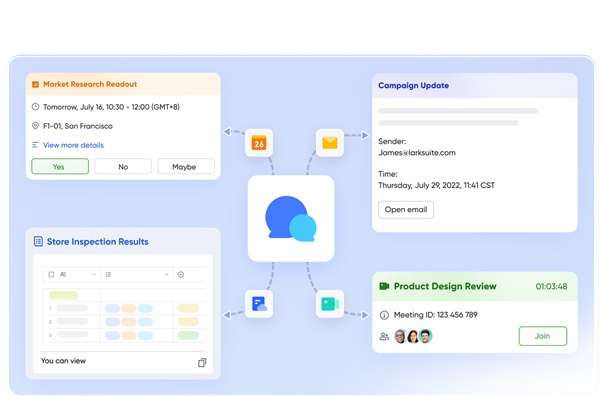
The problem with most communication tools is that they treat every message as equal—a quick emoji response gets the same attention as a critical project update. Lark Messenger changes that by putting structure inside conversation.
Picture this: A support lead flags a major client concern. In most systems, the message gets buried under small talk or mixed topics. In Messenger, the message is shared within a dedicated project channel, tagged with relevant teammates, and linked directly to the client record in Base. Developers see the issue instantly, product managers can assess the scope, and sales can keep the client informed in real time.
By linking chat directly to the work it references, Messenger removes ambiguity and builds shared focus. Messages stop being digital noise and become a continuous thread of collaboration.
Lark Meetings: When connection means conversation that counts
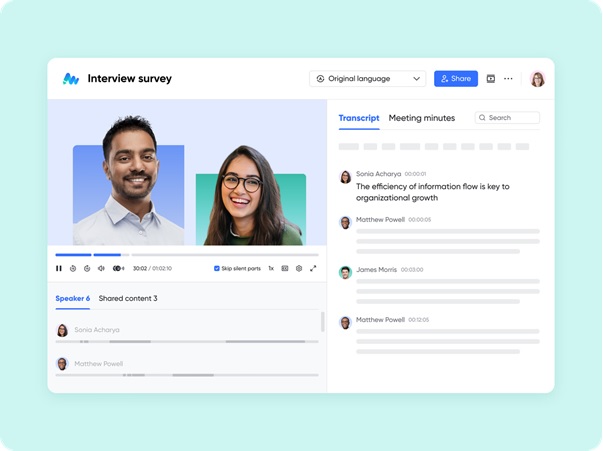
It’s ironic—we created tools to improve communication, and somehow ended up spending more time in meetings than ever. Lark Meetings reverses that trend by bringing structure and action into every discussion.
During a typical product review, for example, teams can open live data from Sheets, co-edit next steps in Lark Docs, and assign follow-up actions as Lark Tasks—all within the same meeting window. Once the session ends, those updates automatically sync to Calendar and Base.
No one leaves wondering what was decided or who’s responsible. Lark ensures every meeting ends with clarity, not confusion. It’s not about holding fewer meetings—it’s about holding better ones.
Lark Wiki: Making information an open door
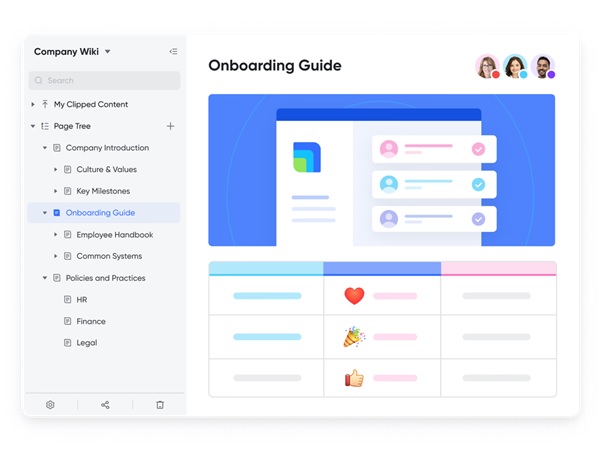
Communication barriers don’t just happen in conversation—they happen when knowledge isn’t shared. Lark Wiki bridges that gap by making organizational information accessible, structured, and alive.
Imagine a new team member joining remotely. Instead of weeks of back-and-forth messages, they open Lark Wiki to find every policy, guide, and best practice already documented. Each entry connects to related Lark Docs or Lark Base records, giving context that static handbooks never could.
Lark Wiki makes institutional knowledge part of everyday work. It reduces repeated explanations, ensures consistency, and helps teams communicate through clarity—not repetition.
Lark Calendar: Synchronizing hybrid collaboration
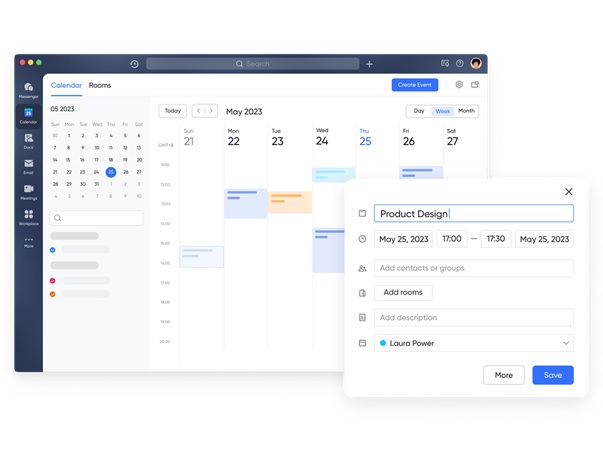
For hybrid teams, scheduling is one of the biggest communication hurdles. Misaligned time zones, double-booked meetings, and unclear ownership can easily fracture productivity. Lark Calendar turns scheduling into synchronization.
Take a design team collaborating across four continents. Lark Calendar automatically adjusts meeting times for every participant’s zone, while linking events to project Lark Docs and Lark Messenger threads. Before the call, participants can read the agenda; afterward, they can see follow-ups in Lark Tasks.
Lark Calendar eliminates the confusion around “who’s available” or “what’s next.” Instead, it keeps collaboration moving at a global rhythm—steady, predictable, and connected.
Lark Base: Connecting data with discussion
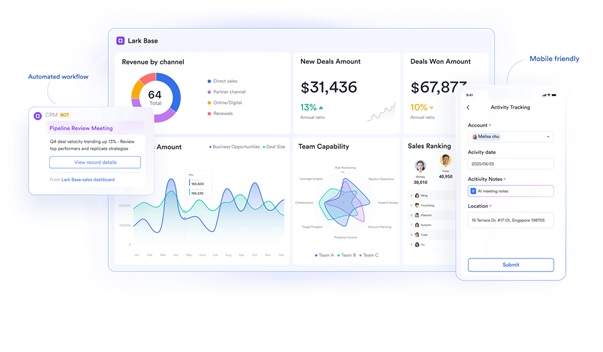
When teams talk about data, they often lose context—numbers float without explanation. Lark Base fixes that by merging operational information with the conversations that depend on it.
A marketing director reviewing campaign performance can comment directly inside Base, tag regional leads, and initiate next steps instantly. There’s no need to export reports or schedule another meeting—the context lives where the data does. Teams already working with CRM software to understand customer behavior often find this especially helpful, since Base brings the same level of clarity to internal operations.
This becomes even more powerful when paired with automated workflow. When key metrics shift, Lark Base automatically alerts the right people, updates dashboards, or creates tasks for follow-up. Instead of chasing information, teams receive it in real time—communication powered by action.
Lark Base transforms data into dialogue, allowing teams to move from analysis to execution without breaking stride.
Lark Docs: Turning ideas into aligned action
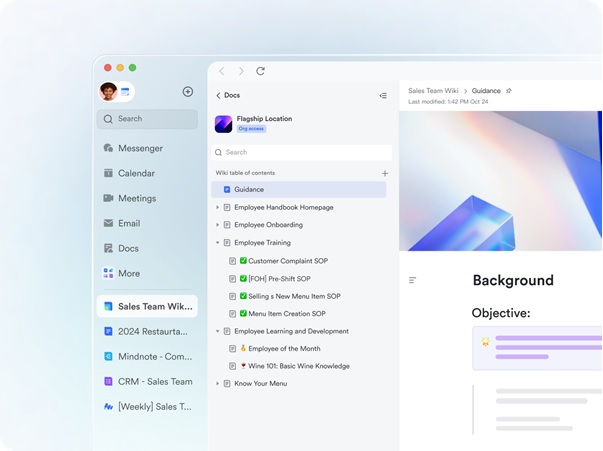
Miscommunication often begins when ideas are scattered across emails, notes, and presentation decks. Lark Docs solves that by giving teams a living workspace to collaborate on ideas in real time.
A strategy team, for instance, can draft a market entry plan together in Lark Docs. Sales adds customer insight, product contributes feature details, and leadership refines the tone—all simultaneously. Comments appear where they matter, discussions happen right beside the text, and finalized decisions link directly to follow-up tasks.
Lark Docs removes the “wait” from collaboration. Everyone stays part of the creative process, no matter their location or role.
Lark Tasks: Keeping every conversation accountable
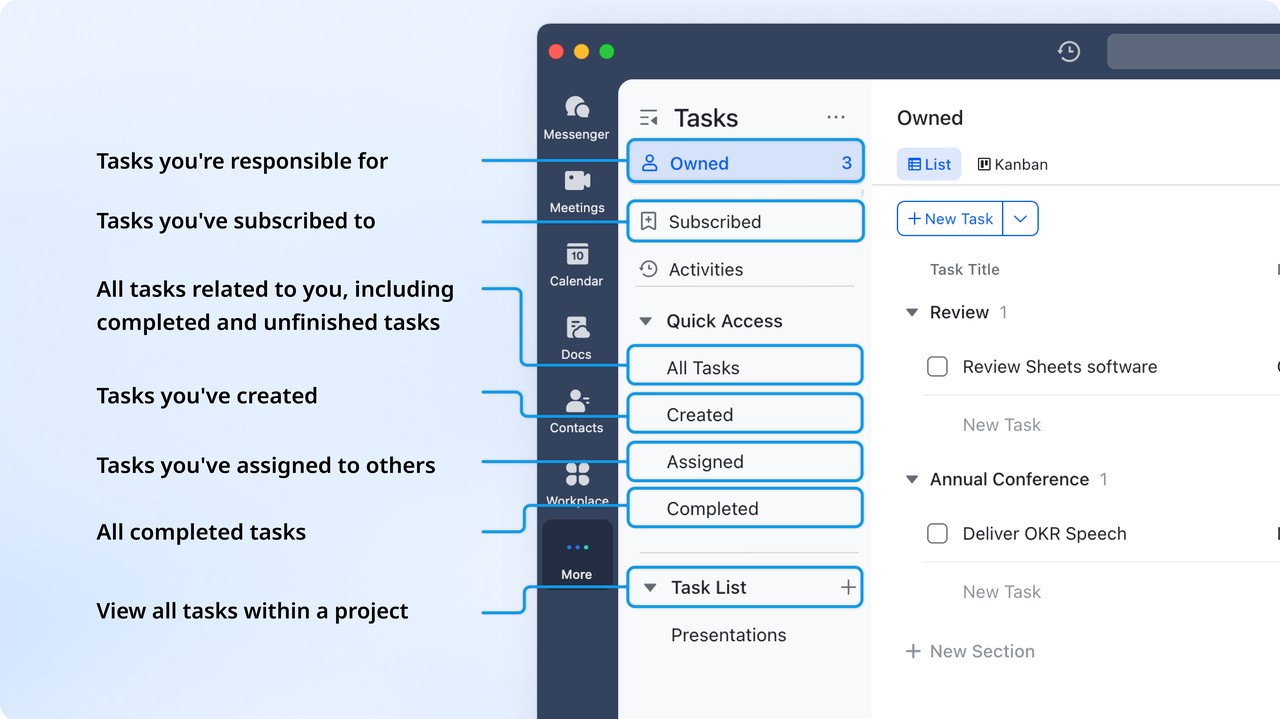
Communication isn’t collaboration until it leads to results. Lark Tasks ensures that every idea, suggestion, or comment transforms into a visible action.
After a brainstorm in Lark Docs or a discussion in Lark Messenger, tasks can be created instantly and assigned to team members. Progress updates sync automatically across Lark Base and Lark Calendar, so leaders can see movement without micromanaging.
For example, during a customer feedback review, tasks for follow-up calls and feature updates can be created on the spot. There’s no ambiguity about who owns what or when it’s due—just clear accountability, visible to everyone.
Tasks gives structure to communication, turning talk into tangible progress.
Lark Sheets: Letting data tell the story
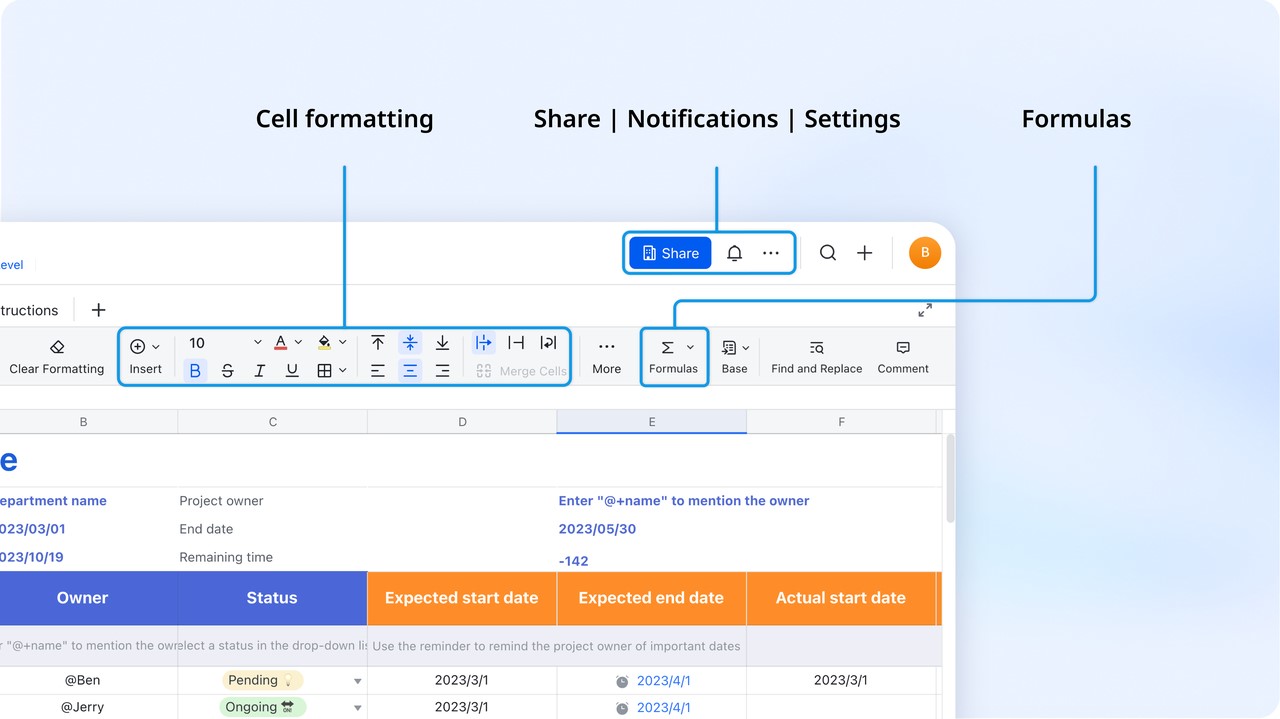
Numbers alone can’t bridge communication gaps—interpretation can. Lark Sheets allows teams to collaborate directly in live data, connecting insights to immediate action.
During a quarterly report, finance and operations teams can review figures together inside Sheets, comment beside trends, and adjust forecasts live. Lark Sheets connects directly with Lark Base, so changes reflect across systems instantly.
By turning data into a shared conversation, Lark Sheets helps teams build understanding—not just reports. Communication becomes continuous, grounded in real-time visibility.
Lark Mail: Making external communication part of the flow
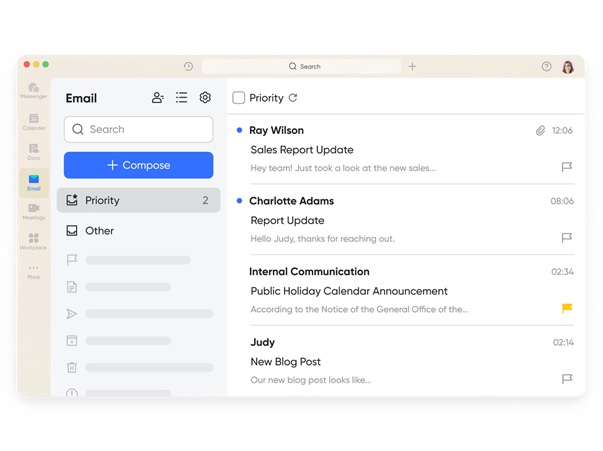
For many teams, email remains the bridge between internal collaboration and external relationships. Lark Mail keeps that bridge connected.
When a client sends a request or an update, it doesn’t get lost in a siloed inbox. Teams can convert that email into a task, share it in Lark Messenger—ensuring that every external message has internal visibility.
Lark Mail turns formal communication into action without creating extra layers of coordination. It’s email redesigned for connected collaboration.
Conclusion
Communication barriers don’t come from people—they come from systems that separate them. The solution isn’t another tool, but a connected one.
A CRM app helps organizations understand their customers, but platforms like Lark ensure that understanding spreads across every department. With tools that combine conversation, documentation, and automation, communication becomes fluid—not fragmented.
In Lark, updates turn into actions, and ideas flow freely between teams. The platform keeps organizations aligned across borders, projects, and priorities. In a world where work never stops moving, connection is no longer optional—it’s essential.
Modern teams don’t just talk; they move in unison. And connected systems like Lark are the next evolution of project management tools keeping teams in sync, communication clear, and innovation constant.

