

Every click, stream, or download leaves a breadcrumb that advertisers, hackers, and even your ISP can trace.
That’s why SOCKS5 proxies matter. A SOCKS5 tunnel handles almost any traffic—torrent sessions, game packets, API calls—while swapping your real IP for a temporary alias. Your activity stays yours alone; no awkward data tweaks alert a watchful server.
In this guide, we’ll unpack the privacy math behind our scoring model and break down the eleven services that scored highest for no-logs policies, crypto payments, stealth protocols, and network reach. By the end, you’ll know which provider fits your threat model—and your budget.
Disappear in plain sight—here’s how.
How we ranked privacy first
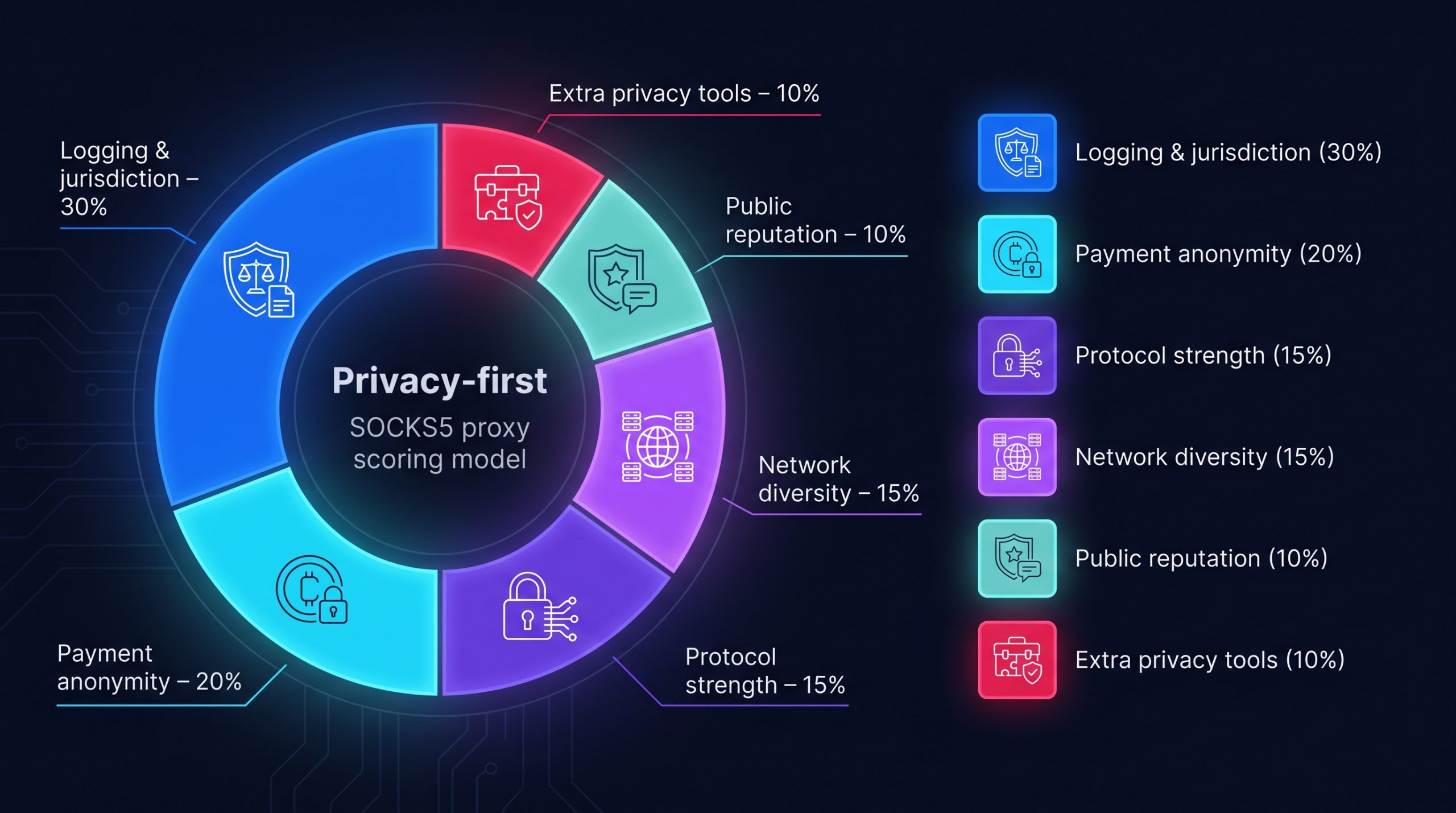
Choosing a proxy isn’t a popularity contest. We built a six-factor scoring model that focuses on what matters for anonymity, then weighted each factor by the real-world risk it reduces.
The first and heaviest weight goes to logging policy and jurisdiction (30%). A provider that never stores traffic data, and operates in a place where spy agencies hold limited sway, gives you the strongest safety net. Private Internet Access twice walked into US courts with nothing to hand over after subpoenas, living proof that “no logs” can be more than marketing (Tom’s Guide review).
Next we measure payment anonymity (20%). If you can pay in Bitcoin or Monero without sharing billing details, your paper trail disappears.
Performance matters only when it affects privacy, so we gave protocol strength and network diversity 15% each. Advanced options like Shadowsocks or VMess slip past deep packet inspection, while a vast, rotating IP pool helps you blend into ordinary traffic.
Finally, public reputation (10%) and extra privacy tools (10%) complete the score. Independent audits, warrant canaries, ad blocking, or port forwarding all tilt the scale.
The result is an evidence-led ranking that rewards verifiable privacy over flashy marketing, so you can choose a proxy with confidence.
1. TorGuard: best overall stealth proxy for privacy
TorGuard built its name in the torrent scene, and its proxy plan has grown into a full privacy toolkit. The service starts with a strict no-logs pledge carried over from its VPN, then adds payment anonymity; Bitcoin, Litecoin, and Monero keep billing details off the record.
TorGuard stealth SOCKS5 proxy service webpage screenshot.
TorGuard stands out for protocol depth. Every proxy endpoint supports standard SOCKS5 and HTTPS, and you can switch to Shadowsocks, Trojan, or the modern V2Ray family (VMess / VLESS) for smooth passage through deep-packet inspection firewalls. That flexibility lets one account run on a seedbox, a sneaker bot, or a corporate firewall with equal ease.
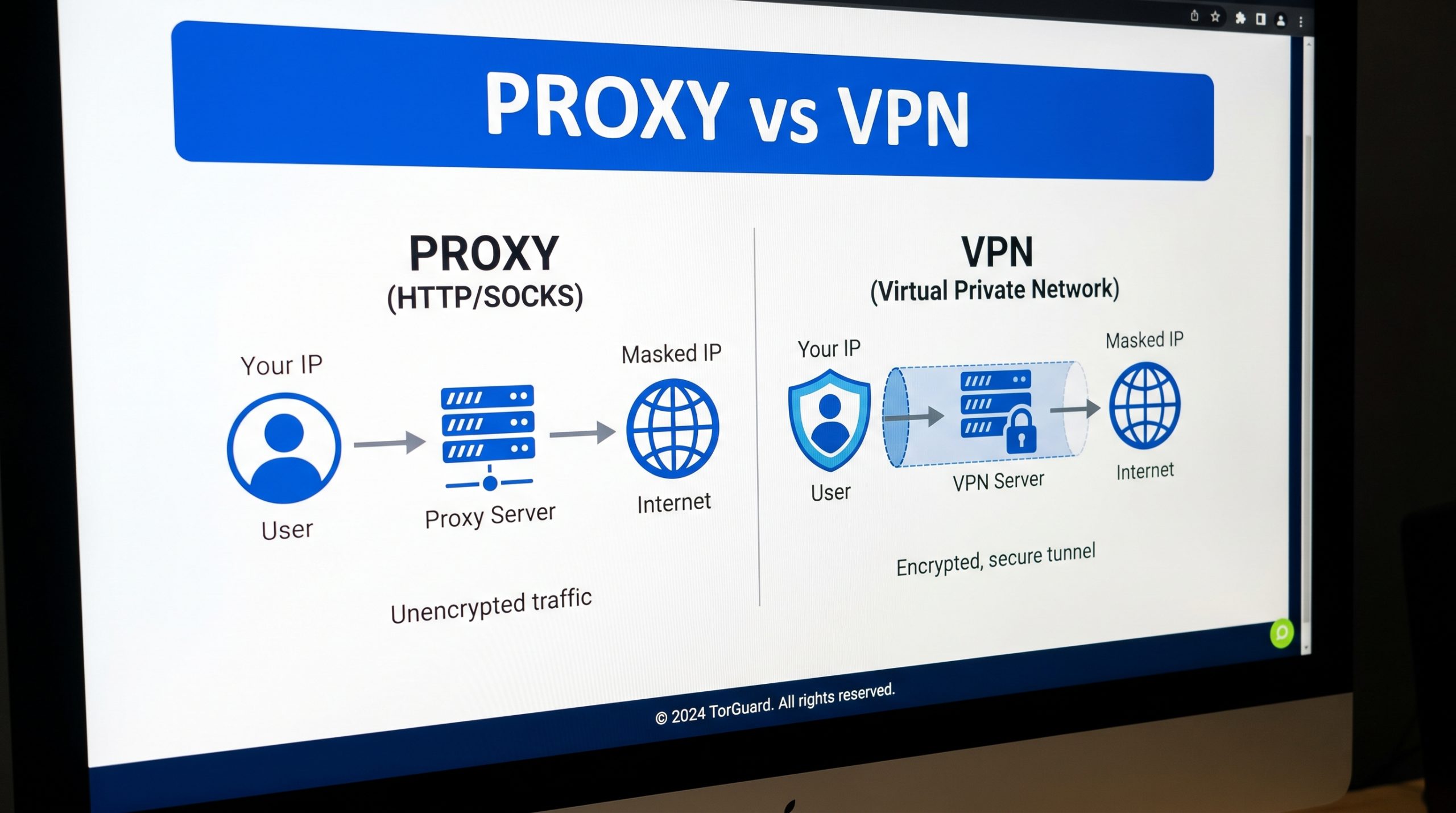
The network is modest, roughly 300 high-bandwidth servers in 22 countries, yet each node sits on a 10 Gbps port with optional port forwarding. Speeds stay quick for P2P, and built-in ad blocking cuts the noise before it reaches your client. Remember, though, a proxy masks your IP without encrypting payloads; TorGuard’s concise proxy vs VPN guide spells out when you should bolt on a full VPN tunnel for encryption and when a simple proxy will do.
Pair the proxy with TorGuard’s VPN in multi-hop mode and you double the cover without extra hardware.
If you value raw anonymity and everyday usability, TorGuard’s stealth proxy checks every box at a fair monthly rate.
2. Oxylabs: enterprise-grade anonymity at global scale
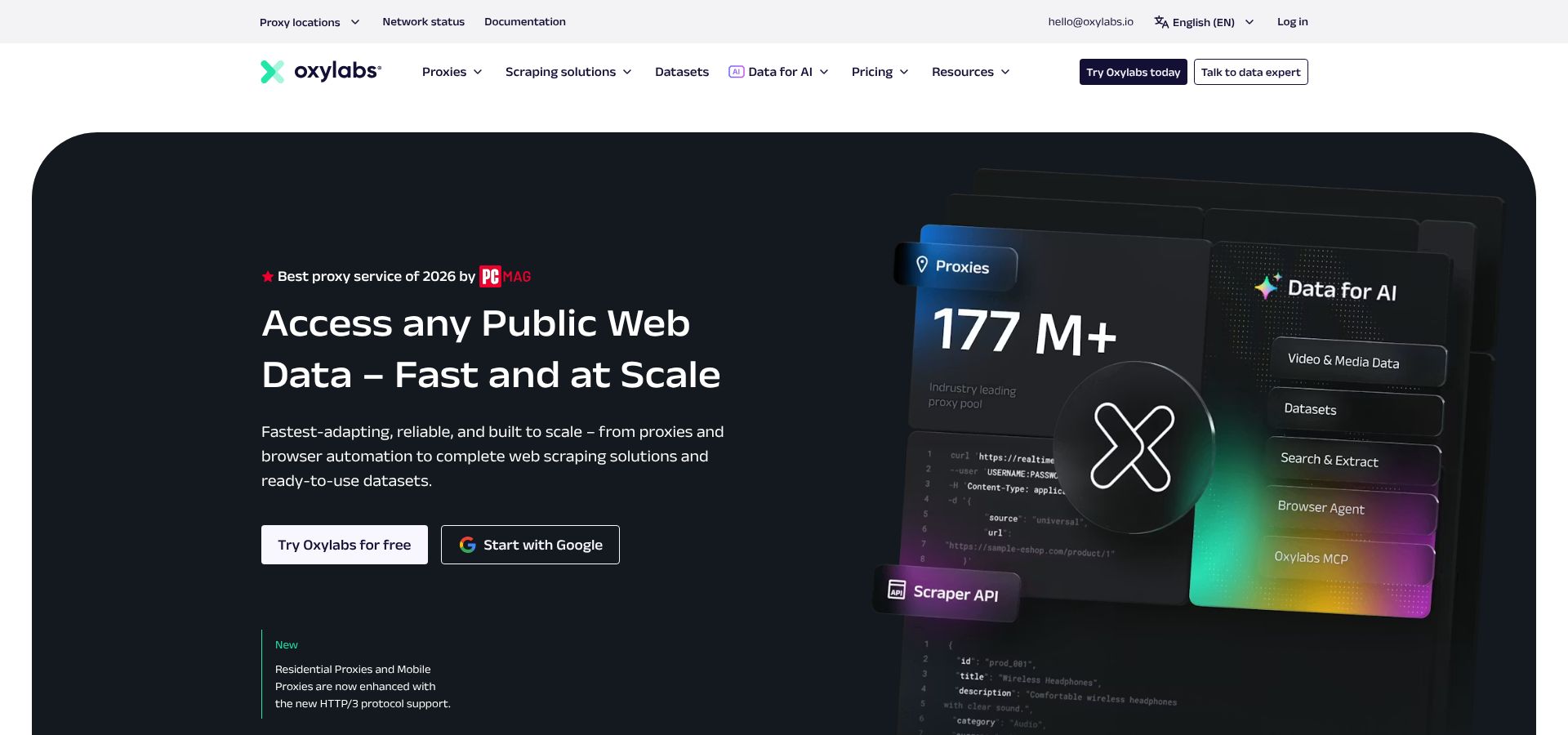
When you need to look like a million users at once, Oxylabs delivers. Its residential network spans more than 175 million IPs across 195 countries, so you can pivot from São Paulo to Seoul in a single API call without recycling addresses.
Oxylabs enterprise-grade SOCKS5 proxy homepage screenshot.
That reach stays sharp because Oxylabs treats security like a regulated industry. The company holds full ISO/IEC 27001:2022 certification, rare in the proxy world, meaning its internal controls and data-handling processes pass the same audits Fortune 500 suppliers face. For anyone scraping sensitive competitive data, that stamp removes a lot of legal guesswork.
Performance matches the paperwork. Independent tests clock success rates above 99.9 percent and response times under half a second, even during peak hours. Add granular targeting down to city or ASN level, plus 24/7 live support that answers quickly, and you have a tool built for serious volume.
Pricing starts high, but if your project runs on strict SLAs—or if your legal team demands a compliance binder before sign-off—Oxylabs often ends up the cheapest risk in town.
3. Bright Data: the world’s largest proxy network, now with AI on tap
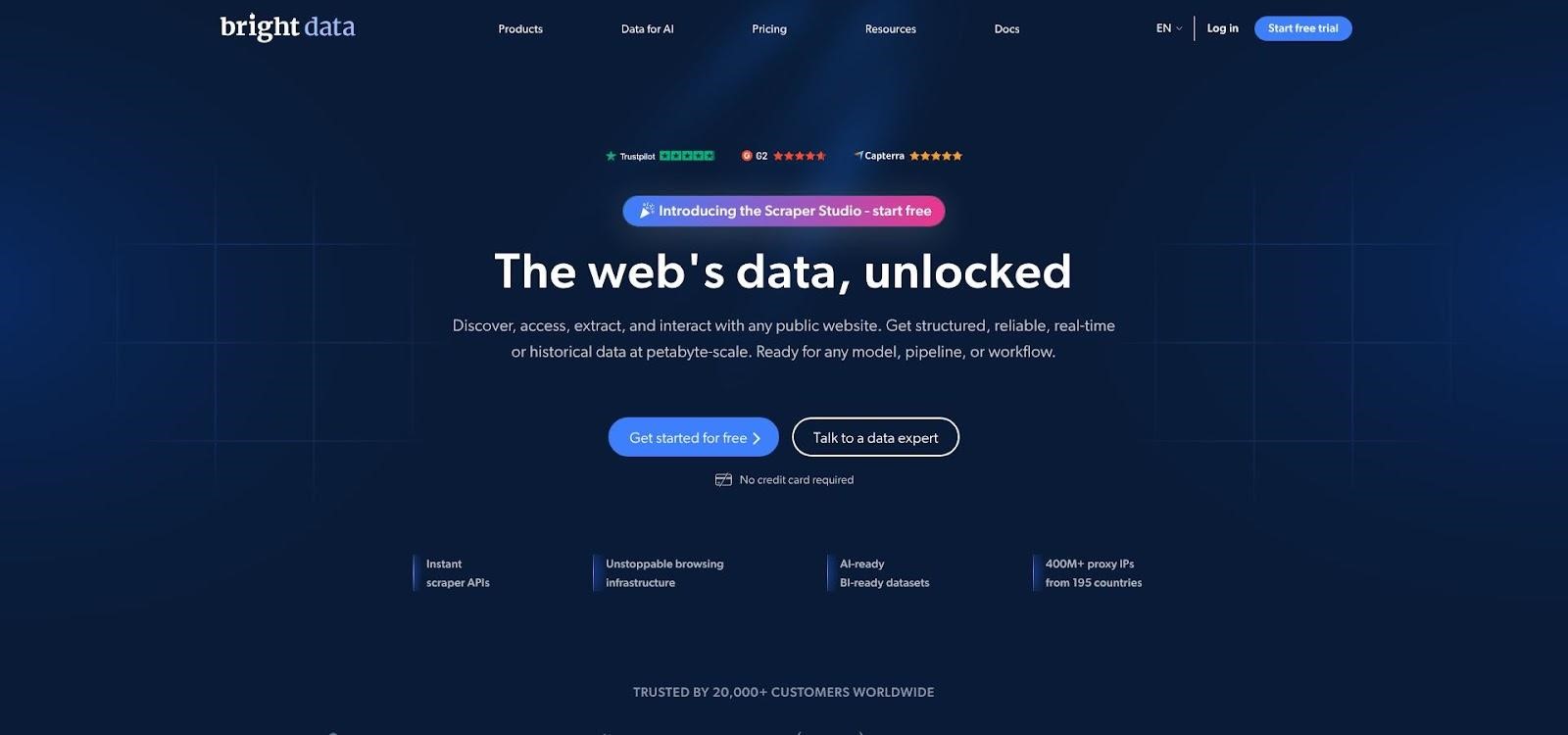
Bright Data (formerly Luminati) wins the numbers game by a mile. Its 400 million-plus IP pool blankets 195 countries, giving you a near-guarantee of a clean address in any market, carrier, or even ZIP code you target.
Bright Data proxy network and AI dashboard webpage screenshot.
Scale is only part of the story. Bright Data’s cloud dashboard doubles as a data-engineering workbench: point-and-click route builders, automatic CAPTCHA peeling, and an AI assistant that writes proxy scripts while you sip coffee. For lean teams, those built-ins cut days from campaign setup and keep devs focused on parsing data, not wrangling it.
Privacy controls lean corporate. Every account goes through basic KYC, and the company keeps usage metrics for billing and abuse prevention. If you need a fully anonymous sign-up, look to TorGuard or Smartproxy instead. For legal departments that ask tough questions, Bright Data counters with ISO 27001, SOC 2, and STAR certifications plus a detailed compliance program.
Speeds impress. Proxyway benchmarks peg residential success rates near 99.95 percent with sub-100 ms latency on well-peered routes. Traffic is unmetered for concurrent sessions, so you can fan out thousands of threads without an asterisk in the fine print.
Bright Data costs more than budget pools, yet when deadlines, uptime, and audit trails carry heavier weight than raw dollars, its all-in toolkit often turns out to be the cheaper path to reliable, dispute-free data.
4. Smartproxy (Decodo): big-pool power without the big-brand price
Smartproxy recently rebranded to Decodo, but its value play stays the same: it gives you enterprise-level reach on a freelance-friendly budget.
The headline stat is huge: over 115 million residential IPs across 195 countries, yet entry plans start around the cost of a large latte per gigabyte. That mix lets you rotate through credible, real-home addresses in almost any market without checking with finance first.
Day-to-day use feels refreshingly frictionless. The dashboard spins up country, city, or ASN filters in seconds, and a Chrome extension pipes fresh SOCKS5 credentials straight into your browser. For coders, the API offers turnkey Python and cURL snippets so you can drop proxies into a scraping script before your coffee cools.
Privacy features land in the “good enough” zone for most. You can sign up with a burner email and pay through CoinGate to keep identity hints thin. Smartproxy logs bandwidth for billing but skips traffic content, and its EU roots keep it aligned with GDPR by design.
Performance holds steady. Independent tests show success rates near 99.7 percent with sub-half-second responses. During crowded sneaker drops speeds can dip, but the 3-day free trial lets you test those peak windows on your own clock.
If TorGuard feels too technical and Oxylabs too corporate, Smartproxy offers a Goldilocks balance: big network, simple tools, and pricing that scales from side hustle to startup.
5. NodeMaven: clean IPs for slipping past strict filters
NodeMaven opts for precision over sheer volume. The residential network holds roughly 30 million IPs, and every address clears an internal fraud-score filter before it reaches you. Pre-screening removes overused IPs that trigger CAPTCHAs, so your first request looks like it came from an ordinary visitor.
Sticky sessions are another highlight. You can lock an IP for up to seven days, useful when a marketplace insists you sign in from the same address each morning, then switch to rapid rotation for bulk scraping at night. Few rivals let you fine-tune persistence with that level of control.
Bandwidth economics are friendly for workloads that spike and rest. Unused data rolls over, and NodeMaven returns ten percent of what you spend as account credit. Over a quarter or two those credits add up to a quiet discount finance teams appreciate.
For privacy, NodeMaven accepts crypto through CoinGate and keeps billing logs minimal, though it has not published a third-party audit yet. If you prefer a brand with a public audit, see the providers above. When clean IP reputation matters more than pool size, NodeMaven delivers solid value.
6. IPRoyal: ethical residential proxies that never expire
IPRoyal builds its reputation on transparency. Every residential IP comes from users who knowingly lease spare bandwidth through the Pawns program, so you are never riding a hacked router. That ethical sourcing shows up in success rates above 99 percent and far fewer “suspicious activity” flags on sensitive sites.
The pricing model is straightforward: buy bandwidth once and it never times out. If your scraping workload ebbs and flows, that no-expiry pool means you are not pushed into a monthly top-up just to maintain access. Add full crypto checkout and you stay pseudonymous while stretching each gigabyte across quarters.
Performance lands in the solid middle of the pack, with about half-second average latency; unlimited threads let you run parallel jobs without silent throttling. The only real limit is rotation control: each plan locks to one country, so multiregion campaigns need separate buckets.
In short, IPRoyal is a smart pick when you value ethical acquisition and hate wasting prepaid data.
7. Private Internet Access: court-proven no-logs with a bonus SOCKS5 server
PIA is first and foremost a VPN, yet its included SOCKS5 proxy keeps torrent fans and automation scripts lightweight. Generate proxy credentials in the dashboard, point your app to a high-bandwidth server in the Netherlands, and your real IP disappears while speeds stay close to line rate because traffic isn’t double-encrypted.
The selling point is trust, not pool size. PIA’s no-logs policy has been tested in court twice and validated by independent auditors, so when the company says, “We have nothing to hand over,” it means it. That assurance helps you rest easy even though the provider operates under US jurisdiction.
Extras add appeal. The desktop client offers a Multi-Hop mode that chains VPN traffic through the SOCKS5 or a Shadowsocks leg. One click and you are two hops deep without juggling providers. Payment anonymity is solid: gift cards, Bitcoin, and even retail vouchers keep personal info off the invoice.
There are limits. You get one proxy location and no rotating IPs, making PIA a poor fit for large-scale scraping. If your goal is safe torrenting or adding a thin privacy layer to a single application, though, it delivers strong value at under three dollars a month when bundled with long-term VPN discounts.
8. SOAX: user-friendly dashboard, pro-level control
SOAX keeps things simple on the surface while giving you enterprise-grade controls under the hood. Spin up residential, mobile, ISP, or datacenter SOCKS5 proxies from one clean web console, then toggle auto-rotation or stickiness with a slider. No command-line gymnastics required.
The pool is substantial, around 155 million IPs across 195 countries, yet the real perk is precision. Drill down to city or carrier in seconds, a lifesaver when a marketing platform cares which tower your packets resemble.
Latency stays low. Independent tests show sub-600 ms responses and a success rate above 99 percent, so bot frameworks glide without retry storms. When hiccups do happen, live chat replies in minutes instead of days.
Pricing starts with a pay-as-you-go $1.99 trial and settles near two dollars per gigabyte at scale. That clarity means no surprise overage email at month end.
If you want granular geo-targeting without the learning curve of Bright Data or the price tag of Oxylabs, SOAX sits in the sweet spot.
9. Webshare: easy entry into paid proxies
Webshare proves you do not need a corporate card to hide your IP. Sign up with an email and you receive ten datacenter SOCKS5 proxies for free, enough to test a bot, flush DNS leaks, or explore torrent privacy.
Upgrade prices stay low. One popular tier offers 100 static proxies and 250 GB of monthly traffic for less than three dollars, making Webshare a practical sandbox for side projects, coursework, or any task where “good enough” beats enterprise-grade features.
Flexibility helps. Each IP works as SOCKS5 or HTTP, so you can reuse credentials across apps without juggling ports. The dashboard exports a tidy CSV of endpoints, bulk-rotates passwords, and supports up to five sub-users, useful when you share bandwidth with teammates.
There are trade-offs. Most of the pool is datacenter, and serious anti-bot systems can spot it quickly. Webshare sells residential bandwidth by the gigabyte, but the pool is smaller and the cost rises. Support is email-only, so do not expect instant chat help.
For learners, low-risk automation, or anyone tired of sketchy “free proxy lists,” Webshare is a sensible first step into the paid proxy world.
10. DataImpulse: pay-as-you-go bandwidth that never expires
DataImpulse is built for seasonal projects. You buy a chunk of traffic, say 10 GB mixed across residential and datacenter pools, and it stays in your account until you use it. No subscription timers, no surprise resets. Growth teams that scrape hard for a month and then pause appreciate that flexibility.
The network is larger than the price tag suggests: about 90 million residential IPs in 195 countries, plus a sizable datacenter wing. Success rates hover around 99.5 percent, and the average one-second response is fast enough for lead-gen crawlers and price monitors, though not quite real-time trading bots.
Security credentials add confidence. DataImpulse holds ISO 27001 certification, rare in the bargain tier, and accepts Bitcoin or Ethereum to keep billing data minimal. Customer support runs 24/7 live chat and fixes proxy strings instead of pasting FAQ links.
Consider two trade-offs. First, mobile 4G IPs are not in the catalog; choose SOAX or Smartproxy if carrier-level blending is critical. Second, the web UI is plain. It works, but power users may prefer the polish of Bright Data.
For teams that hate recurring fees yet still need a global, compliant proxy backbone, DataImpulse pays its way gigabyte by gigabyte.
11. Proxy-Seller: unlimited bandwidth for always-on tasks
Some jobs never pause: price trackers, SEO monitoring, continuous seeding. Paying per gigabyte can feel like paying by the breath. Proxy-Seller solves that with flat-rate, unmetered SOCKS5 plans. You pay per IP, then push as much traffic as your 1 Gbps port can handle without watching a usage graph creep upward.
The catalog is broad. Need a static IPv6 block for mass account creation? Covered. Prefer residential or ISP addresses in a niche region, even parts of Africa most networks skip? Proxy-Seller can often source them. The pool holds about 20 million residential IPs across more than 220 countries, giving better geo-coverage than many budget rivals.
Setup is simple. After checkout you receive a list of endpoints and passwords; no dashboard wizards, yet it works with any app that speaks SOCKS5 or HTTPS. Crypto payments are welcome, and support replies within a few hours by ticket if an IP misbehaves.
Two caveats keep Proxy-Seller near the bottom of our ranking. First, there is no free trial or refund window, so start with a small order to check quality. Second, while success rates top 99 percent for everyday scraping, heavy-rotation workloads still fit better on Bright Data or Oxylabs. For always-on traffic where bandwidth caps are the enemy, though, Proxy-Seller’s unlimited model is tough to beat.
Quick comparison table
Scrolling through eleven deep-dive blurbs can blur your memory. Use this cheat sheet to line up the finalists side by side and spot the proxy that fits your risk profile in seconds.
| Provider | No-logs stance | Crypto accepted? | SOCKS5 extras | Network size & type | Trial / refund | Entry price |
| TorGuard | Zero logs, US jurisdiction | BTC, LTC, XMR | Shadowsocks, V2Ray, Trojan | 300 servers, 22 countries (DC) | None (bundled with VPN) | $9.99 / mo |
| Oxylabs | ISO 27001-audited logging controls | On request | Static & rotating on every proxy type | 175 M residential, 195 countries | 3-day refund | ≈ $7 / GB |
| Bright Data | Business usage metrics retained | No | AI dashboard, CAPTCHA solver | 400 M mixed IPs, 195 countries | 7-day trial | ≈ $4 / GB |
| Smartproxy | Bandwidth logs only | CoinGate | Browser plug-in, code snippets | 115 M residential, 195 countries | 3-day trial | ≈ $3.5 / GB |
| NodeMaven | Minimal, no public audit | CoinGate | 7-day sticky sessions | 30 M residential, 190 countries | None | ≈ $4 / GB |
| IPRoyal | No expiry, usage logs | 100 percent crypto | Unlimited threads | 32 M residential, 195 countries | No trial | $7.00 / GB |
| PIA | Court-proven no logs | BTC, gift cards | VPN multi-hop | Single NL server (DC) | VPN refund window | $2.19 / mo |
| SOAX | GDPR, no activity logs | BTC, ETH | Slider-based rotation | 155 M mixed IPs, 195 countries | $1.99 / 3-day | $2.20 / GB |
| Webshare | Stores account data only | Card, PayPal | HTTP ↔ SOCKS toggle | 27.8 M IPs, 150+ countries (DC) | Free 10 proxies | Free / $2.99 plan |
| DataImpulse | ISO 27001, no expiry | BTC, ETH | Mixed pool one-click | 90 M residential, 195 countries | Pay-as-you-go intro | $1.00 / GB |
| Proxy-Seller | Unstated, EU base | BTC, LTC | Unlimited bandwidth | 20 M residential + IPv6 | No trial | ≈ $0.70 / GB* |
*Price requires 1 000 GB commit. Smaller bundles cost more.
Focus on two key columns: “No-logs stance” shows how much personal residue you leave behind, while “Network size & type” tells you how easily you can blend in at scale. Everything else, such as price, trials, and rotation features, only matters after those boxes are checked.
Pick your proxy in 30 seconds
Still spinning after that torrent of specs? Here is the shortcut. Focus on the single pain point that brought you here, match it to the winner below, and you are done.
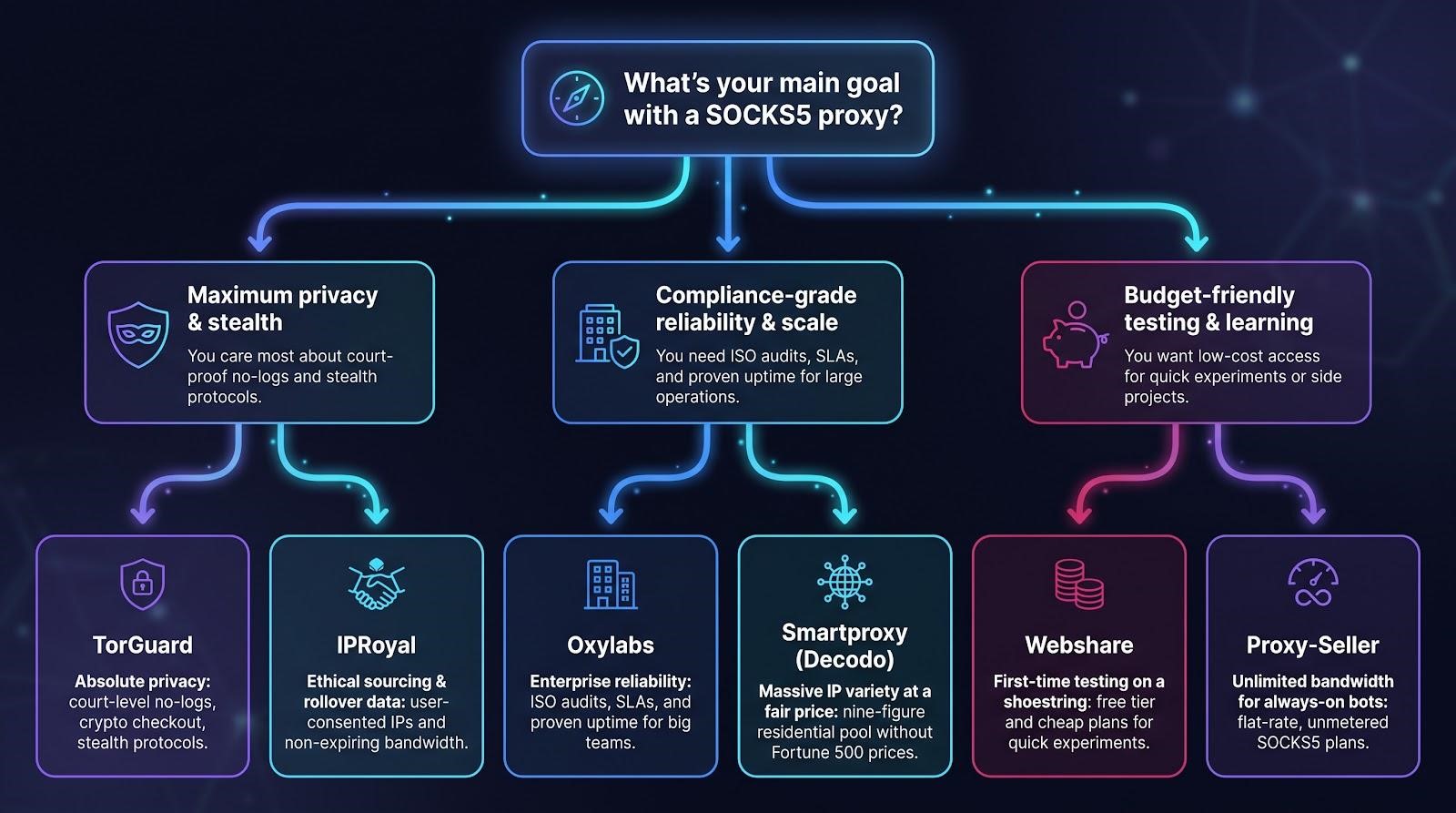
- Absolute privacy: You want court-level no-logs, crypto checkout, and stealth protocols. Choose TorGuard and move on.
- Enterprise reliability: A compliance team is pressuring you? Oxylabs has the ISO paperwork and uptime data they require.
- Massive IP variety at a fair price: Smartproxy (Decodo) delivers nine-figure pools without the Fortune 500 invoice.
- Ethical sourcing and rollover data: IPRoyal lets you feel good about the IPs you rent and never wastes unused gigabytes.
- Unlimited bandwidth for always-on bots: Proxy-Seller’s flat-rate proxies run 24/7 without surprise bills.
- First-time testing on a shoestring: Webshare’s free tier and $2.99 upgrade shorten the learning curve to an evening.
Frequently asked questions
Do SOCKS5 proxies hide me better than a VPN?
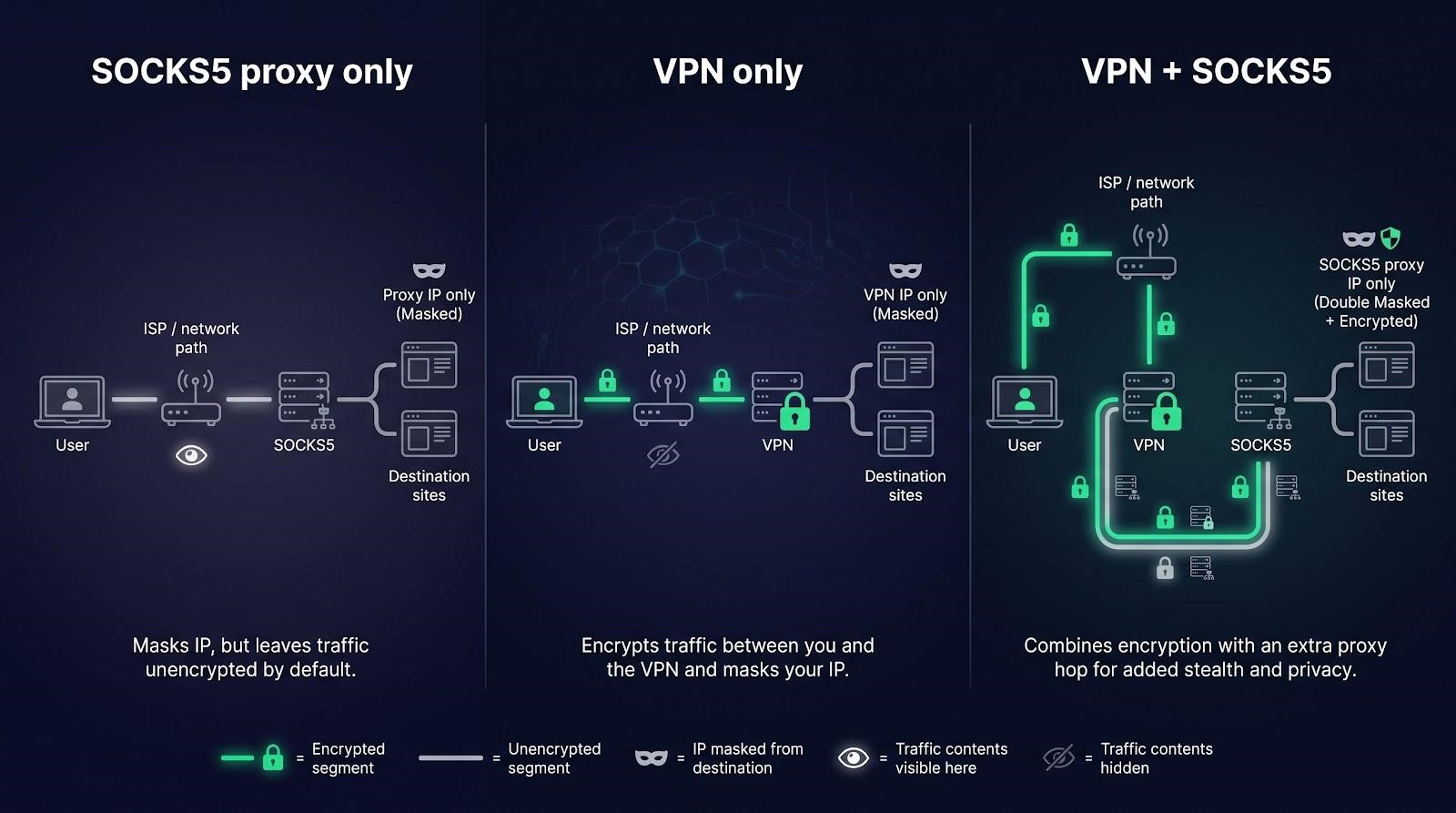
A SOCKS5 proxy masks your IP address like a VPN, but it does not encrypt traffic by default. Anyone who controls the network path, such as your ISP, a public hotspot, or a state firewall, can still read unencrypted data. A no-logs VPN adds full-tunnel encryption at a small speed cost. Using both together (VPN first, then a SOCKS5 proxy, or the reverse) gives you stealth and encryption when privacy is critical.
Can websites detect that I’m using a proxy?
They cannot sniff the protocol itself because SOCKS5 forwards packets without extra headers, yet they can judge the IP’s reputation. Datacenter blocks on public blacklists often trigger CAPTCHAs or bans. Residential or ISP proxies from providers that filter out “burned” IPs (NodeMaven, Oxylabs, Smartproxy) blend in far better. Detection depends on IP quality, not the SOCKS5 label.
What’s the safest way to pay for a proxy account?
Send cryptocurrency from a wallet you control, not an exchange account tied to your ID. Bitcoin is almost universally accepted, while privacy-focused coins like Monero add another layer. For maximum separation, sign up with a fresh email alias and avoid reusing credentials across services. Even if a provider is breached, no breadcrumbs lead back to you.
Conclusion
Choosing the right SOCKS5 proxy comes down to balancing privacy needs, performance demands, and budget realities. Use the quick-pick list above to zero in on a provider that matches your primary concern, test its network during a trial period when available, and pay anonymously whenever possible. With the right service in place, you can browse, scrape, or stream with confidence that your digital footprints stay hidden.

