

For more than a decade, digital marketing has been dominated by biddable environments. Paid media platforms shaped growth strategies, acquisitions were driven through auction-based models, and success was measured largely through ROAS dashboards. Yet as costs rise, competition intensifies and attention becomes increasingly fragmented, brands are being compelled to re-evaluate their marketing mix strategy.
The shift is clear: performance cannot depend entirely on paid channels and must be supported by stronger cross-channel media workflows that sit within broader Media Operations.
Brand-building assets and non-biddable channels are now emerging as core contributors to long-term profitability, customer trust, and efficient acquisition—an approach increasingly championed by every modern performance marketing agency. These environments shape perception, strengthen credibility, reduce bidding dependency, and build organic brand presence that compounds over time. As teams rethink brand systems, they are increasingly exploring advanced creative performance optimisation models connected to Media Creative Optimisation, so that non-paid content performs at the same level of rigour as paid campaigns.
This shift has put non-biddable media back into the spotlight. Once viewed as secondary or purely supportive, these channels are now recognised by leading performance marketing agency teams as critical growth drivers. In reality, the brands that consistently outperform competitors are not the ones spending the most, but the ones combining paid engines with strong earned and owned foundations. This GP explores why non-biddable deserves a seat at the performance table, what it includes, how it drives measurable business impact, and how modern organisations can build integrated systems that treat these channels as commercial assets rather than brand accessories.
What Is Non-Biddable Media, Really?
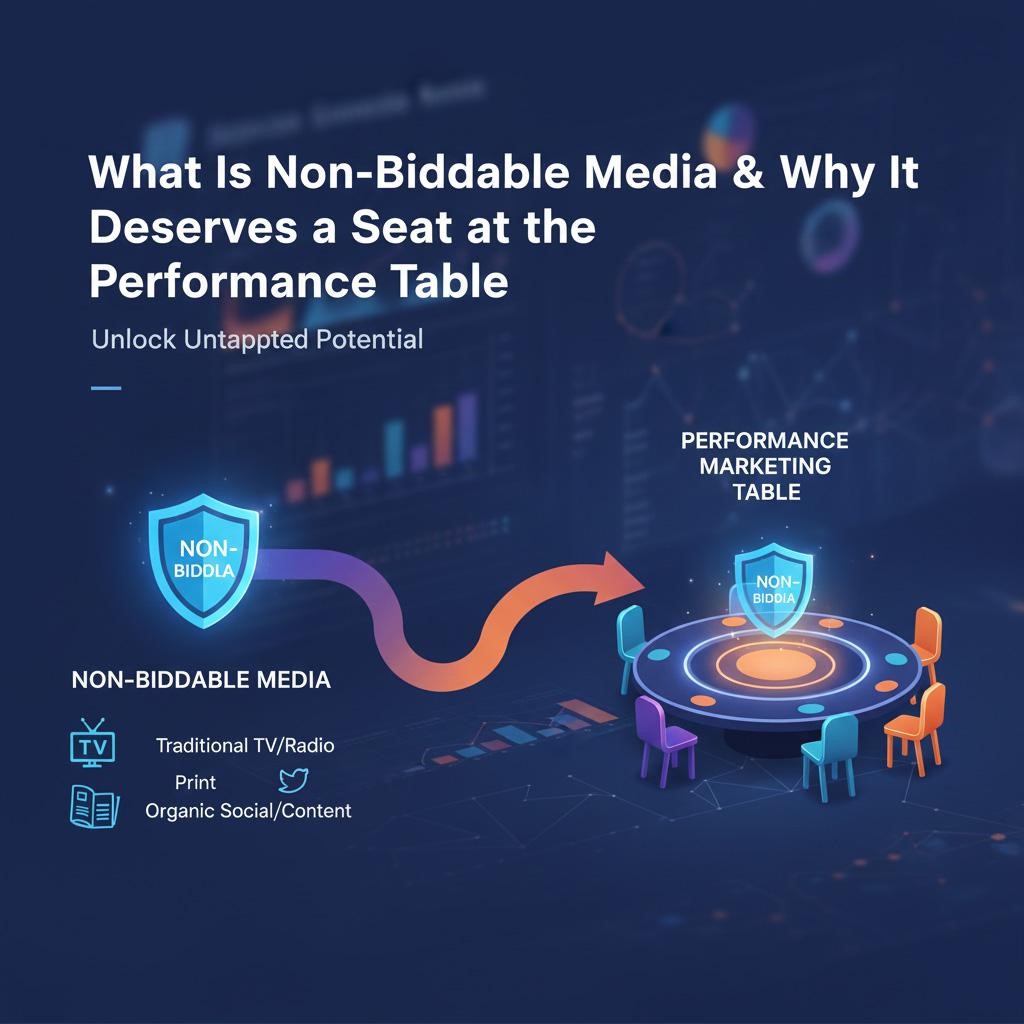
In its simplest definition, non-biddable media includes all visibility, engagement or distribution environments where brands do not pay per click, per impression or per action. These channels are not controlled through bids or auction systems. Instead, they are built, earned or strategically developed through credibility, relevance and consistent content.
Non-biddable environments typically fall under three areas:
- Owned media
- Earned media
- Algorithm-led non-paid placements
These channels work without direct bidding yet influence customer journeys at every stage. In an environment where acquisition costs increase, non-biddable becomes the framework that supports scale without inflated budgets.
Why Non-Biddable Media Matters More Than Ever
Brands across categories are facing the same challenge: rising acquisition costs and diminishing differentiation in paid channels. In this environment, non-biddable media is no longer optional. It is a structural advantage.
There are several reasons for this shift:
1. Paid performance is plateauing
Biddable platforms are saturated. Most categories now compete for the same audiences, pushing CPCs and CPMs upward. Without strong non-biddable support, paid campaigns struggle to remain efficient.
2. Trust is shifting toward organic signals
As audiences grow immune to ads, the influence of earned media value, reviews, UGC, organic visibility and social proof becomes significantly stronger. These channels shape brand credibility growth in ways paid cannot.
3. Algorithms now amplify organic signals
Search engines, social feeds, commerce discovery systems and marketplace ranking algorithms now reward relevance, quality and consistency more than paid boosts.
Brands with strong organic brand presence gain disproportionate visibility.
4. Brand recall now relies on repeating touchpoints
Paid can introduce a brand, but recall comes from persistence across owned media channels such as email, WhatsApp, CRM, communities and organic content.
Non-biddable media is not separate from performance. It strengthens overall media effectiveness and stabilises acquisition efficiency.
Types of Non-Biddable Media and Their Strategic Impact
1. Owned Media Channels
These are the channels a brand fully controls:
- Website and landing pages
- Blog and content hubs
- Email marketing
- WhatsApp and SMS
- CRM journeys
- Brand apps or customer portals
Owned channels convert with significantly higher ROI because brands do not pay per interaction. They also enable deeper storytelling and nurture repeat purchase.
Strong owned ecosystems directly improve:
- Lead-to-sale efficiency
- Repeat purchase rates
- Engagement consistency
- Loyalty and lifetime value
These channels are critical for organic brand presence, enabling direct relationships with audiences without platform dependency.
2. Earned Media
Earned media is visibility generated through public value:
- Press coverage
- Social shares
- User-generated content
- Word-of-mouth
- Organic reviews
- Influencer mentions
Earned media acts as social validation. It carries significantly higher credibility than paid ads and often influences purchase decisions unconsciously. This strengthens brand credibility growth, an essential component of modern brand building.
3. Algorithm-Led Non-Paid Visibility
A growing portion of non-biddable visibility comes from algorithm-driven distribution across platforms:
- Marketplace SEO rankings
- Social feed recommendations
- TikTok/Reels organic reach
- Google Search visibility
- Category placements on content platforms
These placements behave like passive advertising. When optimised correctly, they outperform paid channels in attention and long-term value.
Non-biddable channels now heavily influence media effectiveness, especially at the top and mid funnel.
Why Non-Biddable Deserves a Seat at the Performance Table
For years, non-biddable was treated as “brand work” while performance teams were rewarded based on short-term metrics. That separation is no longer relevant. Non-biddable impacts almost every performance KPI.
Here’s why it now belongs beside paid performance:
1. It reduces acquisition costs
Organic visibility reduces the burden on biddable platforms. When customers discover brands through organic search, social shares or communities, they enter the funnel with lower acquisition cost.
2. It strengthens conversion rates
Strong owned and earned media layers improve trust and category authority. This increases conversion rates across paid campaigns as well.
3. It improves remarketing quality
Audiences built through non-biddable channels are more engaged, making remarketing more efficient and less costly.
4. It shapes long-term differentiation
Paid ads look similar across platforms. Non-biddable channels allow brands to build unique narratives and distinctive content systems, increasing recall.
5. It supports resilient, multi-channel growth
Brands that rely only on paid channels experience volatility. Those with blended ecosystems withstand seasonal, competitive or algorithmic shifts.
Non-biddable is no longer a complementary system. It is a performance stabiliser.
How Non-Biddable and Paid Media Strengthen Each Other
The strongest brands operate integrated systems where non-biddable media and paid channels reinforce one another.
Non-biddable fuels paid
- SEO improves paid search efficiency
- Organic social boosts engagement on paid social
- Strong reviews improve marketplace ad performance
- Communities reduce remarketing dependency
- CRM nurtures future paid audiences
Paid fuels non-biddable
- Paid reach amplifies organic content
- Paid social improves follower velocity
- Marketplace ads improve search ranking
- Paid campaigns increase UGC creation
This cycle forms the foundation of modern cross-channel media workflows, directly connecting into the broader Media Operations ecosystem.
It ensures that paid campaigns do not operate in isolation but are strengthened by everything the brand does organically.
How Creative Shapes Non-Biddable Performance
Creative is not just a paid media driver. It is essential for non-biddable media performance. Stories, visuals and content architecture determine organic discoverability, shareability, retention and long-term impact.
Strong non-biddable creative includes:
- Educational blogs
- Narrative-driven social posts
- High-quality UGC
- Brand-led short videos
- Engaging newsletters
- Thought-leadership content
- Category explainers
- Series-based reels
Content becomes a compounding asset that continues delivering reach long after publication.
This is deeply connected to creative performance optimisation within Media Creative Optimisation, where creative intelligence uplifts organic distribution and long-term media effectiveness.
How Brands Can Build a High-Impact Non-Biddable Ecosystem
A high-performing non-biddable system requires strategic structure. Below are the pillars that modern brands use to scale.
1. Build Owned Media That Converts
Brands should develop:
- High-quality landing pages
- Clear content architecture
- Automated CRM flows
- Distinct brand newsletters
- Optimised mobile experience
Owned channels must operate as conversion engines, not static assets.
2. Strengthen Earned Media Value
Earned media accelerates credibility. This includes:
- PR frameworks
- Influencer seeding
- UGC programmes
- Review generation systems
Earned media is one of the most trusted non-biddable layers.
3. Invest in Organic Social Systems
Organic social is not for posting; it is for building a narrative:
- Series-based content
- Brand property creation
- Community management
- Thought leadership content
Organic social credibility improves paid performance by shaping top-of-funnel relevance.
4. Scale Search and Marketplace SEO
Organic ranking across Google, Amazon, Flipkart and YouTube drives sustainable demand.
Brands must prioritise:
- Keyword architecture
- On-page SEO
- Product detail page optimisation
- Listing quality scores
- Category relevance
Marketplace SEO is especially crucial for ecommerce-driven brands.
5. Codify Creative Governance
Without consistent creative identity, organic systems weaken.
Creative governance includes:
- Tone of voice
- Visual identity
- Content templates
- Message architecture
This ensures brand consistency across all non-biddable formats.
6. Integrate CRM and Lifecycle Journeys
Non-biddable CRM journeys drive:
- Engagement
- Repeat purchase
- Loyalty
- Retention
Lifecycle storytelling is one of the strongest contributors to sustainable performance.
Measuring the Effectiveness of Non-Biddable Media
Non-biddable performance is measurable, provided teams track the right signals.
Key metrics include:
- Organic traffic growth
- Brand search uplift
- Social engagement depth
- Website repeat visits
- Email open and click rates
- Organic conversion contribution
- Marketplace SEO rankings
- Earned media velocity
- Review scores and volume
- UGC frequency
Collectively, these metrics reflect non-biddable health and long-term brand strength.
The Role of Strategic Partners in Scaling Non-Biddable
While many brands understand non-biddable media conceptually, building a structured ecosystem requires expertise across organic search, creative, CRM, content orchestration and analytics.
This is where specialised partners such as Lyxel&Flamingo support brands with:
- Cross-platform non-biddable architecture
- Content system development
- Creative identity and governance
- Organic search and marketplace optimisation
- CRM and lifecycle automation
- Earned media programmes
- Data-led attribution modelling
Lyxel&Flamingo, a digital marketing agency, integrates non-biddable foundations into broader media architecture, ensuring both organic and paid systems work cohesively. This strengthens media effectiveness and supports long-term brand resilience.
Conclusion
Non-biddable media is no longer a background function. It is a core performance engine that strengthens visibility, reduces acquisition costs, improves brand credibility growth and drives long-term profitability.
Through strong non-biddable foundations, deeper earned media value, high-quality owned media channels, and a clear marketing mix strategy, brands can build resilient visibility systems that do not depend on auctions alone.
When these systems connect into cross-channel media workflows within Media Operations and are reinforced through creative performance optimisation within Media Creative Optimisation, non-biddable becomes a scalable and measurable growth lever.

