

A power cut can be a real problem when you are working from home, watching television or trying to get through a hot afternoon without a fan. A home inverter helps keep essential appliances running until the electricity returns. The trick is to find one that fits your needs without spending more than necessary.
If you are choosing between a Luminous inverter and an Exide inverter, there are a few things worth checking. Both brands sell home backup systems, but their models differ in capacity, features and battery requirements.
Here is how they compare and what you should look at before buying.
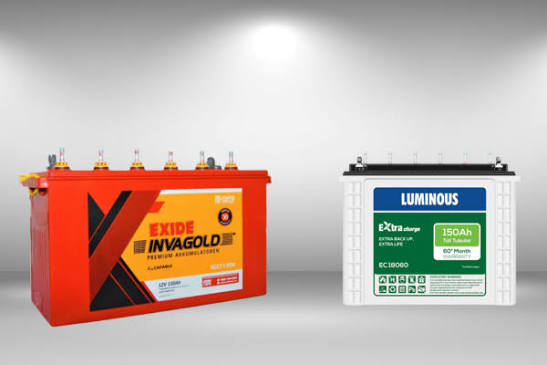
Comparing Luminous and Exide Inverters for Home Use
Capacity Options for Different Homes
The first thing to decide is how many appliances you want to run during a power cut. An inverter that works for a small flat may not be enough for a large family home.
Capacity is usually shown in VA. A higher rating generally allows the inverter to handle a larger load, although the appliances’ power requirements also matter.
- Luminous: Its range includes models for basic household backup as well as higher-capacity options for larger power needs.
- Exide: Its Home Star, Home Magic and Home GQP ranges offer different models for household use.
For example, a small household may only need backup for a few lights, fans and a television. If you also want to run a desktop computer or several other appliances, you may need a higher-capacity model.
Before buying, make a list of the appliances you want to use together. Check their power ratings and ask an installer to help you choose the right capacity.
Battery Types and Backup Time
The inverter stores no electricity by itself in a standard setup. It draws power from a battery when the mains supply goes off. This means the battery plays a big part in deciding how long your appliances will keep running.
Luminous offers batteries in different types, including tubular, gel and lithium-ion options. Exide also sells home inverter batteries, including tubular models.
Here are a few things to consider:
- Tubular batteries: Worth considering for homes that experience regular power cuts.
- Lithium-ion batteries: Available in selected systems and may offer lower routine maintenance.
- Battery capacity: A larger suitable battery can provide longer backup, depending on the load.
- Compatibility: The battery voltage and type must match the inverter’s requirements.
Don’t choose a battery based only on cost. Ask how long it can operate under the load that you anticipate and what kind of maintenance it requires. A store may sell an inverter and battery together, which can make it easier to determine whether they are compatible.
Warranty and Service Support
An inverter may work for years, so it makes sense to check the warranty before paying. The length of the warranty is useful, but the conditions matter just as much.
- Luminous: Several home inverter models listed on its official website come with a 36-month warranty.
- Exide: Selected Home Star, Home Magic and Home GQP models advertise a warranty of up to 42 months, subject to the applicable terms.
Check the warranty for the exact model you plan to buy. Coverage may differ between products, and certain parts or types of damage may not be included.
Service is another point to consider. Find out whether an authorised service centre or technician is available near your home. Ask the dealer how repairs are handled and whether you need to register the product online.
Features That Matter During Power Cuts
Some inverter features are useful every day, while others may not make much difference to your household. It helps to know what you are paying for.
- Luminous: Offers both pure sine wave and square wave models, depending on the series.
- Exide: The Home Star and Home GQP ranges include pure sine wave models with features that vary by variant.
A pure sine wave inverter is worth considering if you want backup for computers, televisions and other compatible electronics. It provides a smooth electrical output similar to the normal mains supply.
You may also find features such as overload protection, battery status displays and automatic charging controls. These can make the inverter easier to use and help protect the system against certain electrical problems.
Check the Total Cost Before Buying
The price on the box may not be the full amount you end up paying. If you need a separate battery, installation or additional wiring, the total cost can increase.
Ask the dealer for a complete quotation covering:
- Inverter price: Check the price of the exact model, not just the brand.
- Battery cost: Confirm whether a battery is included and which type is supplied.
- Installation charges: Ask whether fitting and wiring are included.
- Warranty details: Check the coverage period and any registration requirements.
- Service availability: Confirm where you can get help if the inverter develops a problem.
Take a look at the total costs of each of the configurations. A cheaper inverter may not be the best option if its battery or installation costs more.
Which Brand Fits Your Household?
The right choice depends on your daily routine, the length of power cuts in your area and the appliances you need to keep running.
- For a small family: Look for a model that can handle lights, fans and a television without paying for extra capacity you will not use.
- For frequent power cuts: Give more attention to battery capacity, charging and expected backup time.
- For work from home: Check that the inverter can handle your computer, router and other essential equipment.
- For a larger household: Calculate the combined load before deciding whether you need a higher-capacity model.
A Luminous inverter may be a good fit if you find a model with the capacity, battery support and features you need. Exide is also worth considering if one of its models fits your requirements and offers suitable warranty coverage.
Conclusion
Choosing between Luminous and Exide comes down to the model that works best for your home. Compare capacity, battery compatibility, useful features, warranty terms and local service before making a decision.
A Luminous inverter may suit your needs, while an Exide inverter may be a better fit for another household. Be sure to check the total cost and choose a configuration that lets you keep your important appliances running without exceeding your budget.

