

According to USPTO data reported in 2026, the average wait for a first office action reached 22.2 months in February 2026, while the average total processing time was 27.9 months. The USPTO also received approximately 475,233 new patent applications in fiscal year 2025, representing a 2% increase from the previous year.
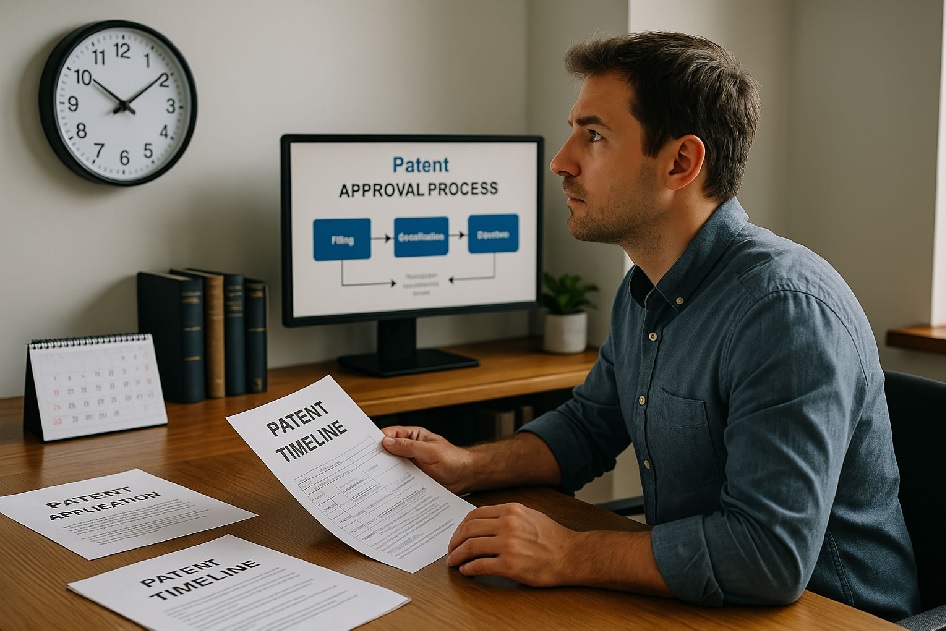
The patent process can take several years, depending on the type of invention, the complexity of the application, and the time needed for examination by the U.S. Patent and Trademark Office (USPTO). The process involves conducting a patent search, preparing and filing an application, responding to examiner questions or objections, and waiting for approval.
If the application requires revisions, additional evidence, or further examination, the process may take longer. Understanding these stages can help inventors set realistic expectations and protect their intellectual property.
According to the Bold Patents, https://boldip.com/, consulting an attorney is a must because they will represent and guide you throughout the patent filing process and defend your patent rights. They can assist you in the various stages of the patent process, from conducting prior art searches and assessing patentability to preparing and filing patent applications.
Let’s take a closer look at how long the patent process takes in the United States.
Preparing and Filing the Application
Before filing, the USPTO encourages applicants to search existing patents and publications, though the examiner will run a separate search.
They encourage the use of electronic filing, and for nonprovisional utility applications, a surcharge will apply for paper submissions. Filing the application will require preparation of the specification, claims, abstract, drawings, if applicable, and numerous other forms.
These services can be offered by patent agents for preparing search reports and patent opinions, utility and design patents, provisional applications, technical drawing preparation, drafting of applications, and handling USPTO Office Actions.
The provisional application is a commonly used first step for patent applications. According to the USPTO website, filing a provisional application has a lower cost and has no examination period, although it will be automatically abandoned after a year of filing.
Also, there are no extensions of the filing period. The provisional application does not become an issued patent without a full application. A nonprovisional application should be filed to gain the priority date from the provisional filing.
The Examination Stage
Once an application is filed, it is evaluated by an examiner for the first time for potential patentability and completeness of the filing. Examiners generally take applications in filing order, though programs such as Track One prioritized examination and can move a case ahead.
Many applications go through more than one office action before they are allowed or abandoned.
Applicants are given several opportunities to respond through application amendments or arguments, or a combination thereof, and after repeated rejections, the applicant can appeal to the Patent Trial and Appeal Board.
There are various reasons that examiners may maintain rejections, such as an applicant’s inability to address them properly, but rejections lead to continued examination, which, in addition to final action responses and/or appeals, all push total pendency well past the wait for a first action.
The dashboard displays several of the patent application processing time statistics. One is first office action pendency, which is defined as the time between filing and the mailing of the first office action.
It reports both total traditional pendency, the time from filing to a final decision (and not including applications with requests for continued examination), and a separate statistic that includes such applications. Reading them in combination is better than considering a single statistic.
Allowance and Issuance
When the application is approved, the patent applicant gets a Notice of Allowance. The applicant has three months to pay the issue fee, and the patent issues after payment. Most of the multiyear wait happens during examination, not at the issuance stage.
There are three main types of patent applications: utility, design, and plant. Each type may take a different amount of time to process.
According to the U.S. Patent and Trademark Office (USPTO), patent applications can take time to review. Since processing times can change, applicants can check the USPTO website for the latest average wait times.
What Comes After a Patent Issue
A granted patent is not always the last chapter. Disputes over infringement and enforcement run on their own timeline in federal court.
Patent matters of that kind are the focus of the Roseville patent lawyer Glenn W. Peterson page from Peterson Watts Law Group, LLP, a firm in Roseville, California, which lists infringement defense and enforcement, claim construction, summary judgment, and pretrial injunctive relief among its patent litigation topics.
Considering each stage individually, it is clear why a single answer is not sufficient to address each inventor’s situation. There are multiple variables at play, including the backlog of the Patent Office, the number of Office Actions an application receives, and even the type of patent application that is filed.
Enforcement adds its own timeline after a patent issue, separate from the application process.
Looking Ahead
The USPTO has plans to cut their backlog over the next few years. They are hoping to reach 650,000 by fiscal year 2028. To accomplish this, they plan on increasing the amount of first office actions to 585,000 by 2025, from 545,000 in 2024.
Even with those targets, results take time, so inventors are better off treating a patent as a long-term project and adjusting plans as each stage unfolds. It is best to take all the published data from the USPTO and make a goal, but also to have the flexibility to adjust your goal as each part of the patent application progresses.

