

For most traders, the right number of currency pairs is smaller than they think. A short list of one to three pairs is a common starting point, and it is often enough to build a full trading plan around.
More pairs feel like more chances. In practice, they often mean more noise, more hidden risk and more trades you never should have taken.
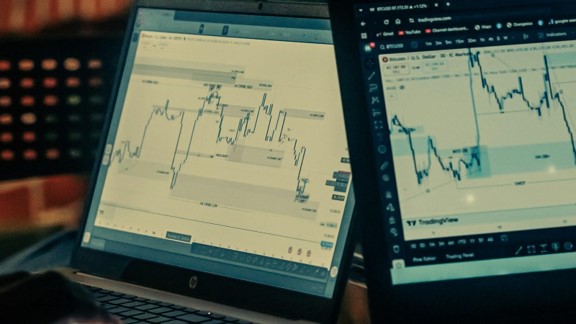
Why fewer pairs often works better
Every pair has its own habits. Some move steadily. Some jump on news. Some are quiet in one session and busy in the next. You only learn these habits by watching the same chart day after day.
When you trade a short list, you start to notice things:
- How far the pair usually travels in a day.
- Which hours bring the real moves.
- How it reacts to its main data releases.
- Where price tends to stall or turn.
That kind of feel is hard to build across fifteen charts. It comes from repetition, and repetition needs focus.
A short list also cuts screen time. You can do proper prep on two pairs before the session. You cannot do the same for twelve.
Why more pairs can hurt
Hidden correlation
Many pairs move together because they share a currency. The US dollar sits on one side of about 89% of all forex trades, according to the 2025 survey by the Bank for International Settlements. So a big dollar move ripples through most of your watchlist at once.
Correlation is measured on a scale from minus 1 to plus 1. A score near plus 1 means two pairs tend to move the same way. A score near minus 1 means they tend to move in opposite directions.
- EUR/USD and GBP/USD have often shown a strong positive link.
- EUR/USD and USD/CHF have often shown a strong negative one.
These links shift over time, so check them rather than assume.
Now picture three long trades on EUR/USD, GBP/USD and AUD/USD, each risking 1%. It looks like three ideas. It is really one bet against the dollar at about 3% risk. This is easy to miss on a Funded Account, where three trades that look separate can hit a daily loss limit together.
Scattered attention
The more charts you watch, the more setups you see. Not all of them are good. With a long list, it is easy to lower your standards just to stay busy. You also have less time to manage the trades you already hold.
Higher costs
Long lists often creep into crosses and exotics. Those pairs tend to carry wider spreads and more slippage than the majors, so each trade starts further behind.
When more pairs make sense
A longer list is not always wrong. It can work when:
- Your strategy is rule based and the same on every pair.
- You trade higher timeframes, so each chart needs only a short check.
- You use the list to scan for setups, then trade only one or two at a time.
- You track and cap your total open risk across all pairs.
The key is to separate your watchlist from your trade list. Watching ten pairs is fine. Holding positions on ten pairs at once is a different story.
How to pick your pairs
Start with the majors. EUR/USD is the most traded pair in the world, and USD/JPY sits second. Both tend to offer tight spreads and steady liquidity.
Then filter for fit:
- Your hours: pick pairs that are active when you can trade. EUR/USD and GBP/USD tend to be busiest during the London and New York hours.
- Your style: fast pairs suit short trades. Calmer pairs suit traders who want slower moves.
- Low overlap: if you trade two pairs, avoid two that move almost as one.
For example, EUR/USD with USD/JPY gives you two liquid majors that do not always move together. EUR/USD with GBP/USD can often give you the same trade twice.
Signs you are trading too many pairs
- You cannot say the typical daily range of each pair you trade.
- You often find trades after the move has already happened.
- Several open trades win or lose together.
- Your journal shows good results on one pair and poor results on the rest.
These signs cost more when the rules are strict. In a one step prop firm evaluation, a single phase with fixed loss limits leaves little room for scattered, half planned trades, so a crowded screen can end the attempt early.
A simple way to start
Pick one major pair. Trade it for a month and keep a journal. Add a second pair only when your results on the first are steady, and make sure the two do not move as one.
You can always widen the list later. It is much harder to unlearn the habits a crowded screen builds.

