

Comparing battery backup systems by purchase price alone rarely reveals their full financial value. A lower initial quote may cover less equipment, while a larger system may include installation, automatic switching and expansion options. The better approach is to calculate what each system costs to purchase, operate and maintain over its expected service life. Then compare those costs against usable energy, backup performance and potential electricity savings. This method turns competing specifications into a practical financial decision.
Calculate the Full Cost Beyond the Purchase Price
Separate Equipment, Installation and Electrical Work
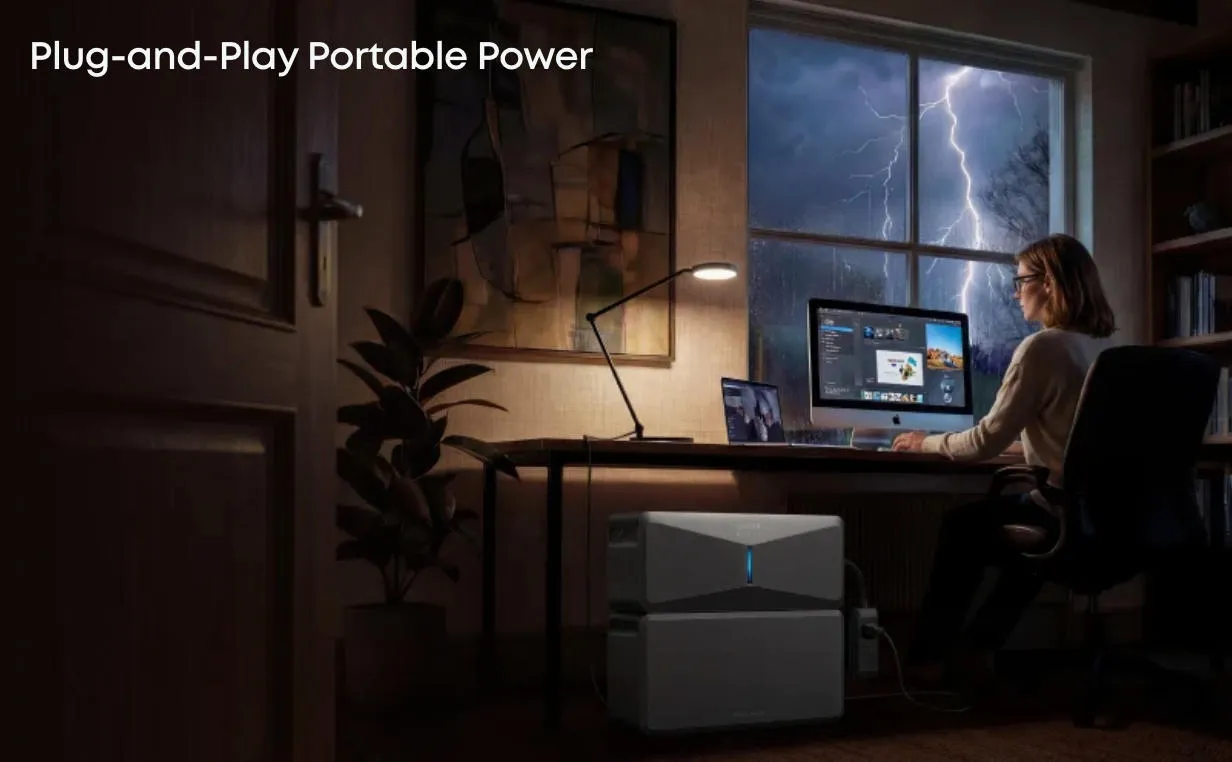
Start by listing every item included in each quotation. The equipment price may cover the battery modules and inverter but exclude the electrical panel, transfer equipment, wiring or installation labor. Some whole-home configurations also require a dedicated power distribution component. Ask installers to separate equipment, labor, electrical modifications, permits and commissioning costs so you can compare equivalent systems. Include any additional hardware needed to connect existing solar panels or a generator. For example, the Anker SOLIX E10 Whole-Home battery backup configuration combines an E10 power module, two B6000 battery modules and a Power Dock. Evaluating the complete configuration provides a clearer cost baseline than comparing the battery price alone.
Compare Cost Per Usable Kilowatt-Hour
Battery capacity indicates how much energy a system stores, but usable energy determines how much electricity you can draw from it. Check the manufacturer’s stated usable capacity and account for any specified reserve or operating limits. Then divide the installed system cost by usable capacity to calculate the initial cost per usable kilowatt-hour. This provides a more meaningful comparison between systems of different sizes. However, capacity alone does not describe the entire value. A household that needs to start a central air conditioner also needs sufficient output and surge capability. The Anker SOLIX E10 supports 7.68 kW of continuous output with batteries, alongside 10 kW of turbo output for up to 90 minutes with two batteries. Those figures provide useful context when comparing energy storage with power delivery requirements.
Include Warranty and Expected Service Life
A system’s purchase price should be considered alongside its warranty and expected service life. Review coverage for battery modules, inverters and power distribution equipment separately because each component may have different terms. Check what the warranty covers, how long it lasts and whether installation conditions affect eligibility. Also review the manufacturer’s battery-cycle specifications and the conditions under which they apply. The Anker SOLIX E10’s B6000 battery modules use lithium iron phosphate chemistry and are rated for more than 4,000 cycles. The battery modules carry a five-year warranty, while the Power Dock carries a ten-year warranty. These details help establish the relevant ownership period for financial comparisons, without treating a warranty or cycle rating as a guarantee of actual service life.
Measure Running Costs and Long-Term Financial Value
Estimate Electricity Savings Under Your Tariff
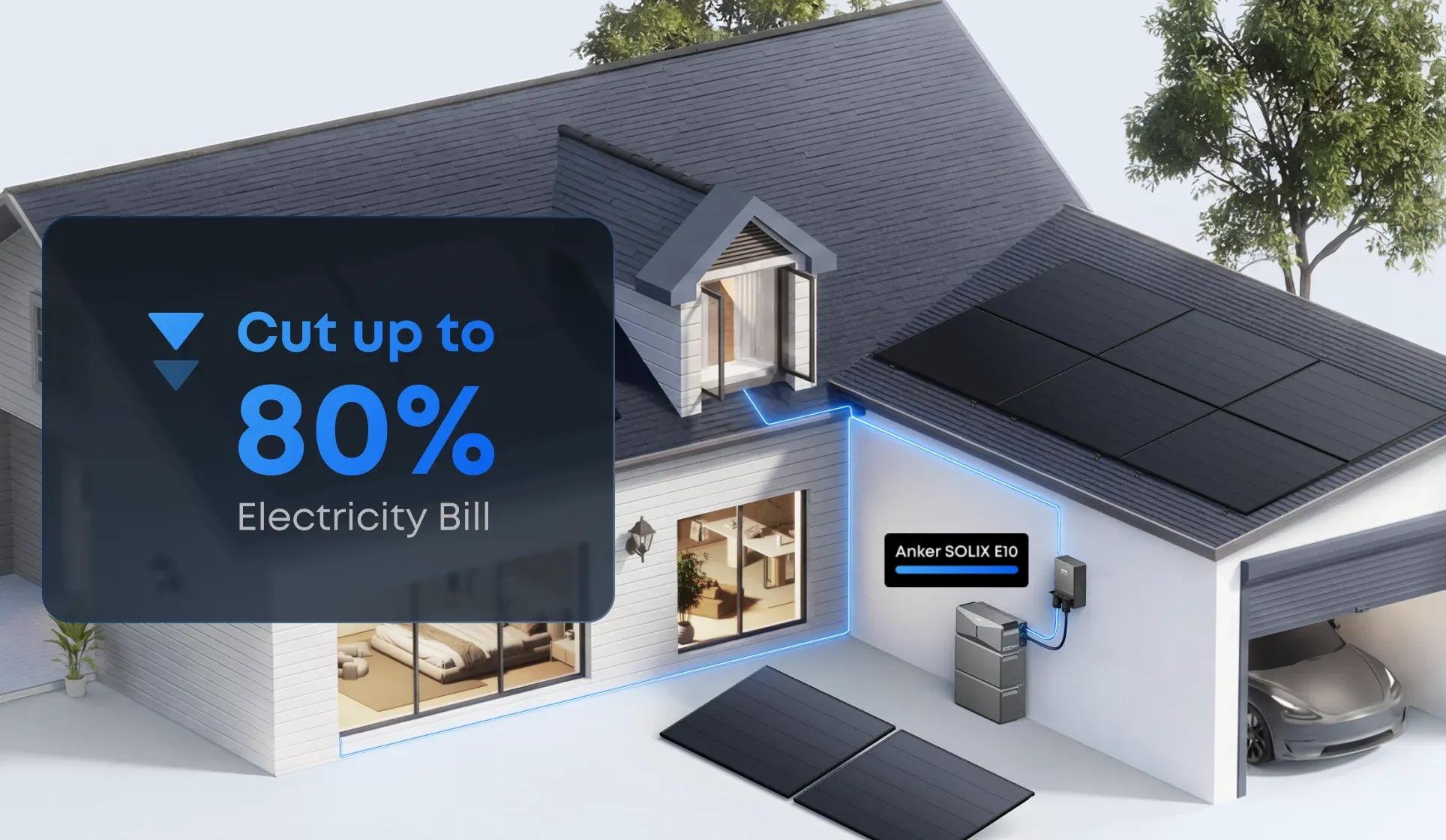
For households with solar panels or time-of-use electricity rates, operating strategy can materially affect the financial return. A battery may store surplus solar electricity for later household consumption or charge during lower-priced periods and discharge when electricity costs more, where local tariffs and system settings support this approach. To estimate savings, compare the cost of charging with the electricity cost avoided during discharge. Account for conversion losses and the proportion of stored energy the household can actually use. The Anker SOLIX E10 supports self-consumption and time-of-use modes, with solar input rated at up to 9 kW per E10 unit. Its financial value therefore depends on local electricity rates, solar production and household consumption patterns rather than capacity alone.
Account for Maintenance, Expansion and Future Needs
Total ownership cost also includes maintenance, possible component replacement and changes in household electricity demand. Check recommended inspections, warranty conditions and any service costs specified by the manufacturer. Consider whether the system allows you to add storage later without replacing the original equipment. Expansion flexibility may reduce the need to purchase an entirely new system if your energy requirements grow. The Anker SOLIX E10 supports up to 30 kWh of battery capacity per E10 power module, with configurations reaching 90 kWh across three E10 units and a Power Dock. It also supports solar input of up to 27 kW across three E10 units. When comparing options, calculate the cost of reaching your expected future capacity instead of assuming the smallest initial configuration will remain sufficient.
Compare Lifetime Cost Against the Energy Delivered
Once you have gathered the figures, estimate the total ownership cost over a consistent period. Add the installed purchase price, expected maintenance and other planned expenses, then subtract estimated electricity bill savings. Divide the result by the total usable energy expected over that period to estimate the net cost per kilowatt-hour delivered. Use the same assumptions for every system, including electricity prices, annual consumption, charging patterns and service life. You can also model different scenarios, such as higher electricity rates or increased solar generation, to see how sensitive the result is. Treat projected savings as estimates rather than guaranteed returns, and distinguish everyday bill savings from the separate financial value of maintaining power during an outage.
Conclusion
The most cost-effective battery system is not necessarily the one with the lowest initial price. Compare complete installation costs, usable capacity, continuous and surge output, warranty coverage, maintenance needs and realistic electricity savings. Then calculate lifetime cost using consistent assumptions across every option. Systems such as the Anker SOLIX E10 also illustrate why expansion capacity and solar integration belong in the calculation. A sound comparison connects the price you pay with the energy, power and service life your household actually needs.

