

A Zero Trust program treats every request as untrusted until proven otherwise. This includes people who walk through the front door. The lobby is an identity gateway, not just a waiting room. It is where physical presence meets digital access.
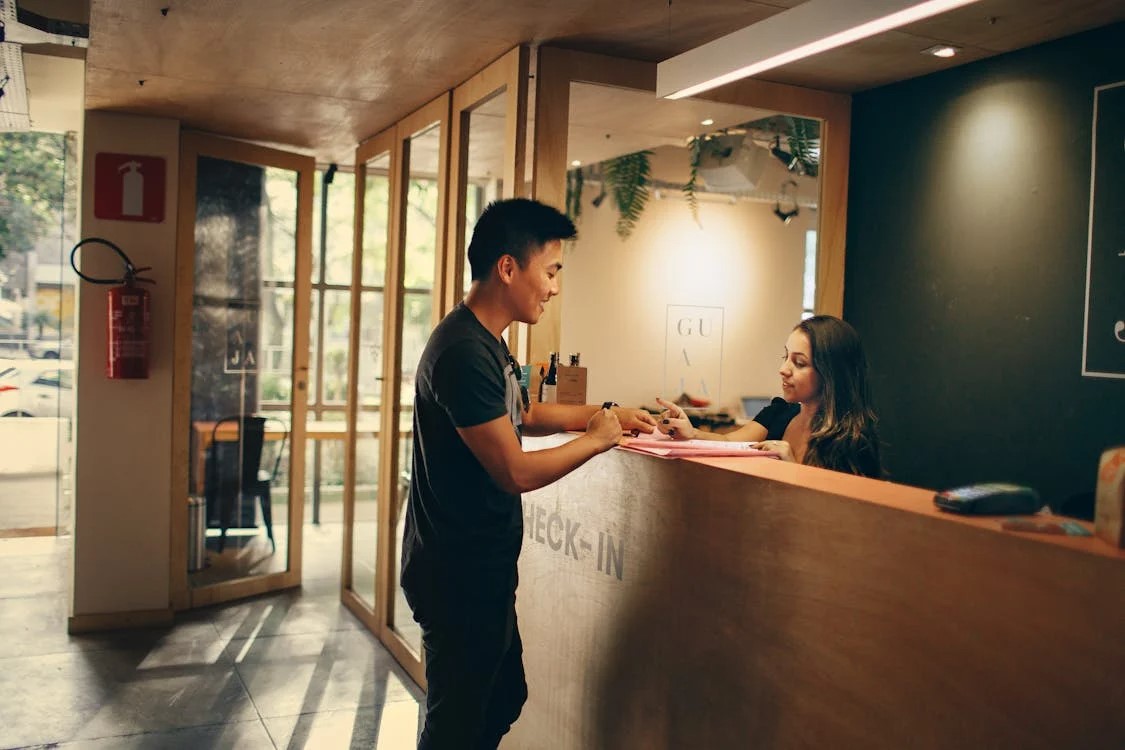
Good reception design verifies who someone is, why they are here, and what they can touch. It also limits what they can do and for how long. The goal is simple: trust no one by default, only grant what is needed, and keep verifying until they leave. Read on to learn how modern receptions fit into a Zero Trust architecture.
1. Verify identity before arrival
Pre-registration sets trust boundaries early. Invite links collect names, emails, and purpose, and calendar integrations bind a visit to a host, which cuts down on spoofing. Identity proofing can add document scan, selfie match, or verification through known email domains.
Risk signals matter here. Unknown sender, last-minute booking, or flagged company domains raise scrutiny. A clear policy engine decides who may pre-register, who needs manual review, and what data to collect for each visitor type.
2. Automate policy at check-in
Make the first interaction do the heavy lifting. Use visitor workflows to bind people, badges, and rules. Capture signature on NDAs or safety briefs, and assign zones and time windows based on the visit type. Use visitor management software to connect check-in with badge printers, access panels, and guest Wi-Fi.
Device posture matters too. If a visitor needs network access, route them to a segmented SSID. Use captive portals and short-lived credentials with automatic expiry.
3. Enforce least privilege on doors and desks
Treat physical access like role-based access. A marketing contractor does not need the lab, and a vendor does not need the file room. Map visitor personas to zones and hours, and only grant what is required for the appointment.
Use turnstiles or secure doors to stop tailgating. You can also pair badges with escort rules where needed. If a badge is lost or the meeting ends early, revoke access in real time. Be sure to keep printing and kiosk stations off the corporate segment.
4. Keep verifying while the visitor is inside
Keep verification active while visitors are inside. Zero Trust is continuous, not a single gate. Re-check identity at inner doors. Use photo badges, QR re-scans, or mobile passes. Additionally, link cameras and analytics to your SOC so signals flow in real time.
Set clear rules and actions. Flag unusual movement, repeated denied reads, or after-hours entries. If a visitor steps into a restricted zone, alert the host and security right away. If a badge is used without a required escort, lock the door and direct the visitor to reception for help.
5. Segment systems that run the lobby
Kiosks, badge printers, labelers, and tablets need their own guardrails. Place them on a dedicated VLAN with egress rules. Limit who can reach them from the corporate network. Be sure to keep firmware updated and admin ports closed, and use reliable power and monitored connectivity.
Treat integrations as high-value paths. API keys should be scoped and rotated. In addition, audit any custom scripts that touch identity or access tables. The lobby is not a place for shared passwords.
6. Log, correlate, and retain the right evidence
Your audit story should be simple and complete. Start with clean data, including visitor identity, host, zones, entry times, and exit times. Send events to the SIEM with consistent fields. Correlate door reads, camera events, and network joins to the same person and visit. Keep retention rules aligned with policy and law. Delete what you do not need, and protect what you keep. Be sure to also give investigators fast search and export tools.
7. Practice incidents like you practice fire drills
Receptions are calm until they are not. Plan for lost badges, failed doors, and false alarms. Write simple playbooks that the front desk can run without handoffs. Test emergency mustering and visitor roll calls. Use printed lists as a backup.
If you need a lockdown, the steps should be one screen and three clicks. After each event, review what happened and improve signage, flows, and rules. Ensure you train new hosts quarterly. Treat the lobby like any other control point.
Endnote
A Zero Trust mindset reaches the front door. Modern receptions verify, limit, and keep checking. They tie identity to physical and digital systems in clear ways, segment their own tools, and produce clean audit trails.
Most of all, they make the secure path the easy path. This is how security scales without slowing the business. Start small, pick one reception, and wire it into your identity stack. Then expand to other sites with the same simple playbook.

