

A craftsman worked with a chisel and hammer, focusing on every strike and solely using his hand to work on every detail. Fast forwarding to the modern world, where a beam of light cuts through steel guided by a code. That’s how CNC technology has brought the CNC fiber laser cutting machine.
Fiber laser cutting has already changed the way industries work with metals and materials, but it’s CNC (Computer Numerical Control) technology, a top innovation, that releases its full potential. Together they deliver high accuracy and speed that manual methods could not achieve.
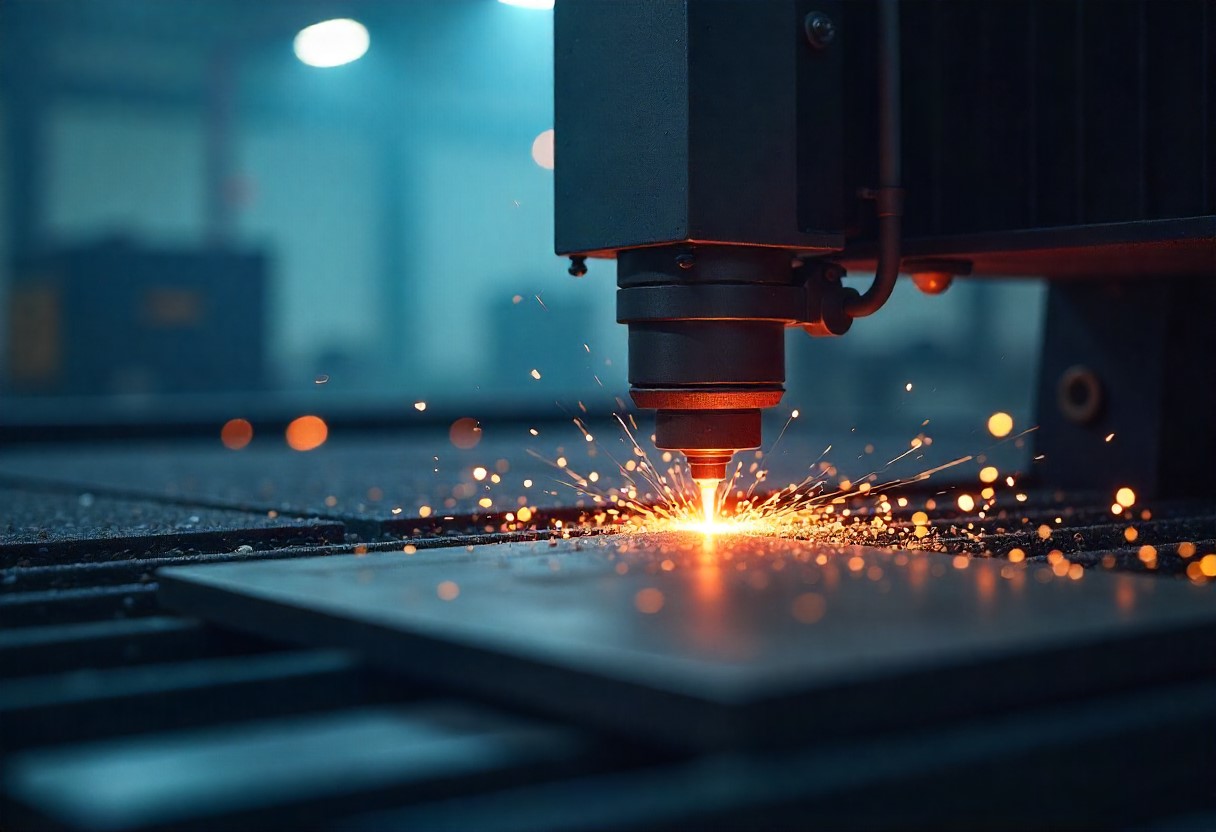
In this article, let’s see how CNC technology is enhancing the accuracy and speed of fiber laser cutters.
What is CNC Technology?
CNC, in long Computer Numerical Control, is an automatic technology that controls mechanical tools using a computer program. The CNC machines operate using pre-programmed software instructions that dictate every movement and function with high accuracy.
Mostly, they come from CAD/CAM software that turns digital designs into a series of numerical codes that represent coordinates, speeds, and angles. The term “numerical” in CNC refers to using numbers and data points to guide the machines.
It allows for rapid modification with just a change in the software code. This flexibility has made CNC an important part of modern manufacturing processes. According to reports, the CNC industry is predicted to reach $15 billion by 2026. This is because CNC technology acts as the brain behind advanced machines that deliver precision and speed.
What is Fiber Laser Cutting?
Fiber laser cutting is an industrial laser cutting technology that melts or vaporizes a workpiece material using the heat of the laser beam. A flexible glass fiber is used to make the fiber optic cable that guides the laser beam.
It is highly efficient and cuts detailed shapes with accuracy. These machines cut materials including metals like stainless steel, brass, carbon steel, aluminum, and titanium. Non-metallic materials like glass, ceramics, and even plastics can be cut with CNC fiber laser cutting machines.
Most importantly, it works using a computer-controlled laser where the CNC controller interprets the instructions of the program and passes them to various parts of the machine. This moves the cutting head accordingly.
How CNC Enhances Cutting Accuracy?
Precision is the most significant part of using CNC machining. Without any constant attention from a skilled operator, it guides and creates parts with precision. As machines rely on computer instructions, human error is eliminated, resulting in high-quality cuts.
CNC machining operations are best for industries that need high precision, with their ability to meet complex specifications. In a short time, CNC machines can offer highly accurate cuts.
Being known for high precision, they also work within specific tolerance levels with defined limits that determine how much a part can deviate from its intended dimensions. For example, aerospace and medical demand much tighter tolerances.
How CNC Boosts Cutting Speed?
CNC technology boosts cutting speed by finding the most efficient route for the laser, while reducing unnecessary movements. It allows for real-time adjustments, adapting automatically to the cutting speed and power based on the material’s thickness or the complexity of the design.
Advanced CNC systems perform multiple tasks and eliminate the need for setups and transitions. With software updates, changes to designs can be implemented quickly without the need for manual adjustments.
Industry-Wide Impact of CNC Fiber Laser Cutting Machine
- Automotive
CNC fiber laser cutters in the automotive industry deliver precision and speed in manufacturing components like body panels, battery trays, engine parts, and interior trims. It enables accuracy and cuts materials including high-strength steel and aluminum.
- Aerospace
The aerospace industry requires tight tolerance where even a tiny error can cause an issue in the entire system. Parts like turbine blades, avionics, and structural components are cut with CNC fiber laser cutting machines. They also create complex geometries including internal structures that are required for parts like sensors, fuel injectors, and microelectronics.
- Electronics
Fiber laser cutting is widely used in manufacturing electronics to cut them without damaging any sensitive components. For example, they cut printed circuit boards with microscopic cuts precisely using CNC.
- Signage & Artistry
Fiber laser cutters go through unlimited creativity. From logos, letters, motifs, to detailed screens and architectural panels, they handle them easily with sharp, burr-free finishes rapidly.
- Medical
The medical industry also requires tight tolerance, and so fiber lasers play an important role here. They shape micro instruments and implants while producing detailed structures.
CNC technology offers micro-precision and clean results by helping fiber laser cutters to cut materials effortlessly.
Conclusion: Laser Sharp Future
CNC technology enhances fiber laser cutting machines to make perfect cuts from perfect circles to detailed curves. These CNC fiber laser cutting machines meet today’s demands with precision and speed. This results in high productivity and impressive cost savings.
As technology evolves, we can expect greater levels of automation, smarter software, and accessible systems. Cesar CNC, a leading fiber laser cutting machine manufacturer, offers a wide range of CNC fiber laser cutting machines, and investing in one of them is a step forward as well as it leads towards profitable and sustainable growth.

