

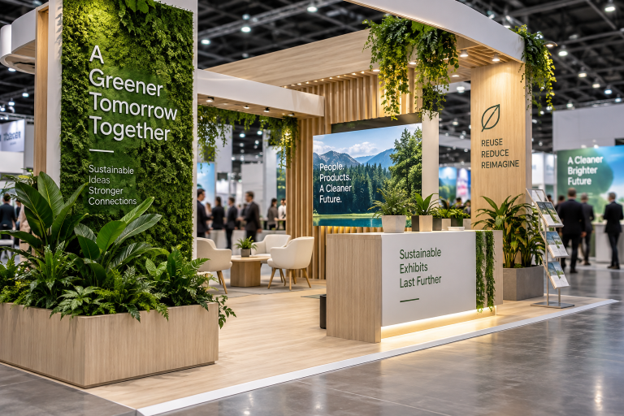
Trade shows have a waste problem, and anyone who has worked the hall floor knows it. Booths built for one event, torn down in a hurry, and rolled into a skip by the evening. Carpet sampled once and dumped. Brochures shipped home in boxes because nobody handed them out. It adds up fast, and it costs exhibitors twice, once in build budgets and again in the growing pressure from attendees who notice which brands take sustainability seriously.
The good news is that sustainable exhibiting isn’t a compromise anymore. Some of the smartest-looking booths at any show are now the ones designed around reuse, better materials, and less waste. The changes tend to pay for themselves, as a booth designed for rebuilding eliminates the need for repurchasing in the next quarter. Here are six ways to design greener without giving up an inch of visual impact.
6 Sustainable Tips for Designing Custom Trade Show Exhibits
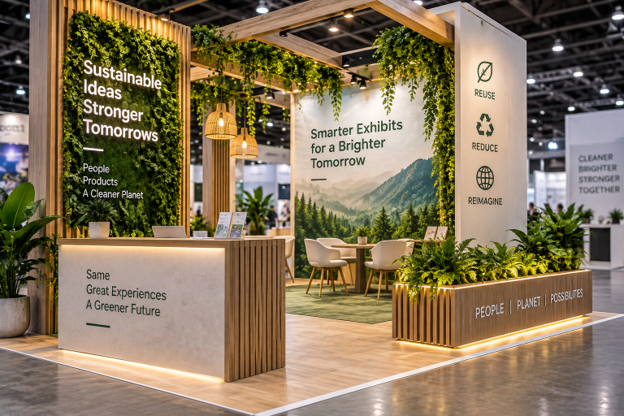
1. Design for Reuse From the Very First Sketch
The single biggest sustainability decision happens before any material is chosen. If a booth is designed as a one-off for one show, waste is baked in from the start. If it’s designed in modular pieces, walls that reconfigure, counters that work in different layouts, and graphics that swap rather than rebuild, the same core structure can serve a dozen shows in different shapes.
Think of it like building blocks rather than a sculpture. A 20×20 island this month can become a 10×10 inline next month with the same parts. The cost per event drops every time the kit gets reused, which is exactly the math that makes the sustainability pitch to your finance team an easy one.
When planning custom trade show exhibits, ask specifically how the design reconfigures for other booth sizes and shows. A designer who answers that question easily is already thinking the right way.
2. Choose Materials That Have a Second Life
Booth materials vary enormously in how they age and where they end up. Vinyl and MDF are cheap, but MDF essentially can’t be recycled once laminated, and vinyl graphics are notoriously hard to repurpose. Meanwhile, aluminum framing, FSC-certified wood, dye-sublimation-printed fabric, and cardboard-based fixtures can all be reused, recycled, or composted far more easily.
Fabric is worth a special mention. A tension fabric graphic weighs a fraction of a rigid panel, ships lighter, packs smaller, and produces far fewer transport emissions over a year of shows. It also folds rather than cracks, so it survives reuse far better.
Even flooring, one of the guiltiest items in the average booth, now comes in recyclable and rental options that skip the waste entirely.
3. Rent, Buy Used, or Recycle What’s Left
Not every element needs to be owned. Rental booths and furniture make sense for occasional exhibitors, for regional shows far from home, and for testing a new layout before committing to a purchase. Someone else handles storage, maintenance, and eventual disposal, and the resources get shared across many exhibitors instead of sitting idle in a warehouse.
Buying used is the other underrated route. Quality exhibition hardware is built for hard use, so a pre-owned structure often has years of shows left in it at a fraction of the price and with no new manufacturing footprint at all. Established trade show booth companies that deal in used exhibits make this a straightforward option, not a gamble.
And for whatever genuinely reaches the end of its life, look into exhibition recycling programs. Many venues and show organizers now collect booth materials for recycling and to responsibly break down old structures. Ask before defaulting to the skip.
4. Go Digital With Your Graphics Where You Can
A wall of printed posters for every show means reprinting every time a product name, price, or campaign changes. Screens change with a file transfer, and nothing goes to landfill.
A sensible mix works best. Digital displays handle the content that changes—product demos, videos, rotating messaging—while a small set of durable printed elements carries the brand identity. Those long-life pieces get designed once to last years instead of once per campaign.
There’s a lighting bonus here too. Modern LED screens and LED booth lighting draw a fraction of the power of older halogen setups, which matters at shows where venues are increasingly charging or tracking energy use.
5. Ship Less, Ship Smarter
Transport is the invisible chunk of most trade show carbon footprints. Every kilogram of booth weight becomes fuel, and every poor packing job becomes replacement parts.
Lighter modular materials cut shipping weight directly. Cases designed around the actual booth let one vehicle do what two used to. And local sourcing, hiring furniture or renting heavy items near the venue instead of hauling them across the country, removes whole legs of the journey.
Padding deserves a mention too. Single-use foam and plastic wrap get binned at every load-in. Reusable padded cases, blankets, and crates cost more once and then stop generating waste at every show after.
6. Skip the Landfill Brochures
Printed collateral is where sustainable intentions usually die. Thousands of brochures printed, half of them left behind or binned, and a fresh print run for the next show.
The alternatives are now better than the original. QR codes on a single durable sign lead to a landing page with everything the brochure had, and you can see exactly how many people are engaged, something paper could never tell you. Follow-up emails after the show land with people who actually want the information, and nothing needs shipping home.
If print is non-negotiable for your audience, print less on recycled stock with vegetable-based inks and collect leftovers at the end of the show rather than abandoning them on the table.
End Point
Sustainable exhibiting isn’t about doing trade shows with less. It’s about designing smarter so the same materials work harder for longer. Modular structures, recyclable materials, digital graphics, lighter shipping, fewer brochures, and rental or used components each cut waste on their own. Together, they turn a booth from a per-event expense into a long-running asset, and they put your brand on the right side of a question more attendees ask every year. The greenest booth in the hall and the most cost-effective one are increasingly the same booth.

